




Their inclusion does not guarantee they will be prescribed to any individual, as treatment decisions are ultimately at the discretion of healthcare providers. Healthcare providers may prescribe other medications or recommend non-pharmacological treatment based on the patient’s unique health circumstances and needs. Read more
Zepbound has a
Highlights
- Zepbound is an injectable medication prescribed for specific individuals who need to lose weight or have obstructive sleep apnea.
- Zepbound’s starter dose is always low, 2.5 mg per week, to reduce the risk of side effects and ensure tolerability.
- Zepbound’s dosage is slowly increased to find a balance between what works for weight loss and what’s tolerated.
- The recommended Zepbound maintenance doses for weight loss are 5 mg, 10 mg, or 15 mg weekly, depending on individual circumstances.
If you read the Zepbound package information, it states that dosages must be started low and increased slowly. Your healthcare provider will also monitor your response to the medication to determine the right maintenance dose. This article explains in detail why this is necessary and how to do it safely.
Get a personalized weight loss plan and instructions on Zepbound use online.
What Is Zepbound
Let us begin with a brief overview of Zepbound.
Zepbound (
- For weight loss and management in adults with obesity and individuals who are overweight and have specific co-existing conditions.
- To treat moderate to severe obstructive sleep apnea (OSA) in adults with obesity.
Zepbound works like the hormones
Zepbound Doses and Strengths
Zepbound is given via a subcutaneous (meaning just under the skin) injection only once weekly, which is convenient for people with a busy lifestyle or fear of needles.
The available dose strengths of Zepbound range from low to high: 2.5 mg, 5 mg, 7.5 mg, 10 mg, 12.5 mg, or 15 mg per 0.5 mL, and we’ll discuss the rationale for these different doses of Zepbound a little later.
If Zepbound is the appropriate weight-loss medication for you, after discussing your additional needs, a healthcare provider prescribes either a single-dose prefilled pen or a single-dose vial of Zepbound.
- Pens contain four weekly doses
- A vial contains one weekly dose
Zepbound Dosing Schedule or Titration Timeline
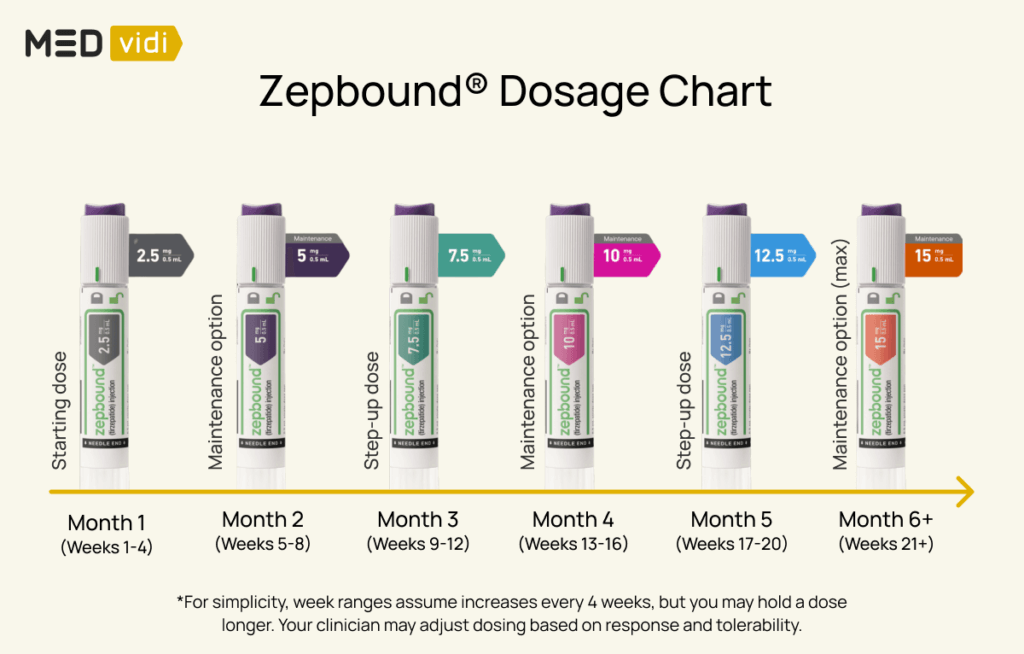
Remember that we mentioned the ‘start low, and go slow’ Zepbound prescribing schedule? Let us take a closer look at it.
Starting Dose
The standard Zepbound starting dose is always the lowest dose of 2.5 mg weekly. The only reason for this is to allow the person time to get used to the medication; they will not lose weight on this low dose.
If they do not have side effects or have settled after at least 4 weeks on the 2.5 mg dose, it can be increased.

Dose Escalation
Here comes the ‘go slow’ part of the treatment.
For the same reason that you start on 2.5 mg per week for at least 4 weeks, you’ll increase the Zepbound dose by 2.5 mg each time, but only after at least 4 weeks on the previous dosage:
2.5 mg → 5 mg → 7.5 mg → 10 mg → 12.5 mg → 15 mg
Unfortunately, Zepbound often has dose-dependent side effects. This means the side effects are worse at higher doses, and this is why the doses are increased slowly.
Everyone is different, so some people may have no side effects; for other individuals, they may ease after 2 weeks, and for some people, the side effects may still be going on at 6 weeks after increasing the dose.
Maintenance Doses
The Zepbound maintenance doses are the long-term doses that result in weight loss; the recommended dosages from the prescribing information are
This dose will vary for everyone, and your healthcare provider will recommend continuing the lowest effective dose that doesn’t cause side effects. For this reason, you will follow up regularly with your provider to find your individualized maintenance dose. At MEDvidi, you can have online weight loss consultations and discuss your weight management plan conveniently from home.
Importantly, the maximum recommended dosage for all individuals is 15 mg per week.
See a licensed medical provider online to discuss your weight loss plan and get personalized instructions.
Zepbound Dosage Chart (Week-by-week)
Here’s a summary of the Zepbound dosage levels by week, showing the purpose of each step, and what it might be followed by. Note that each change of dose requires approval from your provider.
|
Weeks |
Dose (once weekly) |
Purpose of stage |
Common next step |
|
Weeks 1–4 |
2.5 mg |
|
No side effects: Increase to 5 mg |
|
Weeks 5–8 |
5 mg |
|
No side effects and good weight loss → maintain on 5 mg No side effects and no response → increase to 7.5 mg after ≥4 weeks |
|
Weeks 9–12* |
7.5 mg |
|
No side effects → increase to 10 mg after ≥4 weeks |
|
Weeks 13–16* |
10 mg |
|
No side effects and good weight loss → maintain on 10 mg No side effects and no response → increase to 12.5 mg after ≥4 weeks |
|
Weeks 17–20* |
12.5 mg |
|
No side effects → increase to 15 mg after ≥4 weeks |
|
Weeks 21+* |
15 mg |
|
Stay on this dose if there is a good response |
*For simplicity, week ranges show that Zepbound (tirzepatide) dose increases every 4 weeks; but, in practice, for:
- Mild side effects that haven’t settled at 4 weeks: take the same dose for longer.
- Severe side effects that aren’t settling within a few weeks: drop to the previous dosage.
Expected Results and Timeframes
Next, let’s look at when you might start to see Zepbound working.
- Decreased appetite: as early as 1 week
- Less hunger and fewer cravings: between 3 and 8 weeks
- Weight changes: as early as
4 weeks[6]
And what can you expect on your maintenance dose? Clinical trials found that after about 18 months:
- People lose, on average, about
20%[7] of their baseline weight - 8 out of 10 people lost
at least 10%[7]
But remember, you won’t see optimal results without the essential lifestyle changes.
How to Use Zepbound Safely
Knowing the Zepbound dosing instructions is essential for your safety and to make sure it works properly.
Let’s run through everything you need to know.
How to Store Zepbound
Generally, refrigerate Zepbound between 36°F and 46°F, and never freeze it.
However, if you’re traveling, only the Zepbound pen can be stored at room temperature for 21 days.
How and When to Self-inject Zepbound
Zepbound is a once-weekly injection, so choose a weekday that:
- Is easy to remember
- Fits into your schedule
Decide on a convenient time on that weekday. The medication can be taken at any time of the day, with or without food.
Where to Inject Zepbound
Choose a site that is clean, dry, and healthy.
Self-inject into the:
- Stomach, except 2 inches around your belly button
- Thigh
Or with someone’s help:
- The back of the upper arm
Alternate between the left and right sides to avoid overuse and irritation of a single site.
How to Give Yourself the Dose
Your healthcare practitioner will explain the exact method of how to measure and administer the injection; this is slightly different for the pens and vials, but generally, the steps are:
- Check the Zepbound fluid to make sure it is clear and colorless (possibly slightly yellow)
- Use an alcohol swab to clean the site
- Create a small fold by pinching the skin
- After measuring the dose, stick the pen or needle into the skin fold at a 90-degree angle
- Inject the dose
- Press the injection site with the swab or gauze after removing the needle
What to Do With the Needle
Never try to recap the needle. Throw it away into:
- An FDA-approved container
- A heavy-duty plastic leak-proof household container with a tight-fitting lid, and label it ‘Medication Needles’
What to Do About Missed Doses
The ‘missed dose deadline’ is 4 days.
- Less than 4 days since the missed dose: Take it immediately
- If more than 4 days have passed: Skip the missed dose and take the next dose on the regularly scheduled day.
Changing Your Injection Day
If necessary, you can
Get ongoing support from a licensed provider online during your weight loss journey.
Potential Side Effects and Warnings
Common Side Effects
At least
- Nausea or vomiting
- Diarrhea or constipation
- Stomach pain or indigestion
- Heartburn
- Injection site redness, swelling, or pain
- Fatigue
- Hypersensitivity reactions
- Hair loss
Luckily, they usually
Serious Side Effects
Sometimes, more serious reactions occur, and you should contact a healthcare professional immediately if you develop:
- Ongoing or severe abdominal pain, which might be a pancreas or gallbladder problem
- Changes in vision
- Severe allergies like hives, swollen lips or tongue, or a tight throat or chest
- New or overwhelming depression or anxiety, or having thoughts of self-harm
Your healthcare provider may also request tests to monitor for lower blood sugar levels and kidney function.
Who Shouldn’t Take Zepbound?
A black box warning, the most serious warning type, in the prescribing information states that there might be a risk of thyroid cancer with Zepbound use. So people with a personal or family history of thyroid tumors should not use Zepbound. Also, people with a known allergy to the medication or its components shouldn’t take it. Before getting prescribed Zepbound, you’ll discuss your health history and contraindications in more detail with your healthcare provider.
Tips for Using Zepbound Successfully
Pairing Medication With Healthy Habits
Zepbound may not be as effective when used alone. You need to eat a low-calorie diet and increase your physical exercise to achieve the desired results.
Tips for Managing Side Effects
If side effects aren’t settling, it’s possible it’s just too much Zepbound for your body, and you might need a lower maintenance dosage; your healthcare provider will advise you about this.
In the meantime, you can try a few things to manage the side effects.
- Nausea: Eat smaller, more frequent meals and avoid greasy food.
- Constipation: Increase your dietary fiber intake and make sure you drink plenty of water to stay hydrated.
- Diarrhea: Follow a bland diet, for example, boiled chicken breasts, white rice, bananas, apple sauce, and white bread toast. Focus on drinking fluids such as water, clear broths, electrolyte drinks, and diluted apple or grape juice.
Get Nutritional and Mental Health Support
A weight loss journey can be difficult, and you don’t have to do it alone. Ask your healthcare provider for recommendations to nutritionists and therapists for help along the way.
Conclusion
Zepbound is an injectable weight loss medication that is effective but often has side effects. For this reason, the starting dose is low and is increased slowly, with at least a four-week trial on the newly prescribed dose. At each step, a healthcare professional will assess your progress and adjust the dose as needed.
If you’d like to learn more about being prescribed a weight loss medication or have a question about your current Zepbound prescription, schedule an online appointment with one of MEDvidi’s licensed healthcare providers.
FAQs
Is Concerta stronger than Adderall?
No, neither Concerta or Adderall are stronger than the other. They are two different medications that are in the same class of stimulants. One or the other may work better for certain people based on their treatment goals, age, or health history.
Which is better, Concerta or Adderall XR?
There is no universal better medication. Which medication is the right choice for you is an individualized decision. Your healthcare provider will evaluate your health history, lifestyle, and treatment goals to determine which medication will be better for you.
Do you lose more weight on Concerta or Adderall?
Can you take Adderall and Concerta together?
Is Concerta less addictive than Adderall?
Does Concerta give you energy like Adderall?
What is 27 mg of Concerta equal to in Adderall?
It is important to talk with your healthcare provider before changing medications or changing the amount of Concerta or Adderall that you are taking. Generally, the amount of Adderall you will need to have the same effect is half the dose of Concerta. In this example, 27 mg of Concerta would be roughly 14 mg of Adderall. This calculation is provided for informational purposes only and cannot substitute professional advice. Talk with your healthcare provider about how to safely switch from one medication to the other.