




Both
Highlights
- Both Lexapro and Zoloft are approved to treat major depressive disorder (MDD).
- Each medication has specific side effects and risks, so it is important to share your entire health history.
- MEDvidi has licensed healthcare providers in multiple states who are able to prescribe Lexapro or Zoloft online if deemed clinically necessary.
Lexapro and Zoloft are commonly prescribed for certain types of anxiety and depression. Both medications belong to the class of antidepressants known as selective serotonin reuptake inhibitors (SSRIs) and help stabilize mood. This guide outlines everything you need to know about Lexapro and Zoloft, from their usage and dosage to unique differences and side effects.
Lexapro vs Zoloft at a Glance
Lexapro is the brand name for the active ingredient escitalopram. It is a selective serotonin reuptake inhibitor (SSRI). Zoloft is the brand name for the active ingredient sertraline. It is also an SSRI.
Similarities of Zoloft and Lexapro
- Both are in the same medication class known as SSRIs and work by increasing serotonin.
- Both are FDA-approved to treat major depression and other conditions.
- Because they are both SSRIs, they share very similar side effects.
- Both medications are taken once each day and can take several weeks to start working.
- Both have a black box warning about increased risk of suicidal thoughts in young people.
The main differences between Zoloft and Lexapro are their specific dosages and the conditions they are FDA-approved to treat.
|
Lexapro |
Zoloft |
|
|
Drug Class |
Selective serotonin reuptake inhibitor (SSRI) |
Selective serotonin reuptake inhibitor (SSRI) |
|
Generic Name |
Escitalopram |
Sertraline |
|
Dosage form |
Tablets and oral solution |
Tablets and oral solution |
|
Dosage strength |
Tablets: 5 mg, 10 mg, 20 mg Oral Solution: 1 mg/ml |
Tablets: 25 mg, 50 mg, 100 mg Oral Solution: 20 mg/ml |
|
Typical duration of treatment |
6 months to 1 year. However, many patients continue for years |
From several months to a few years |
|
Age |
Commonly prescribed for adolescents and adults; may sometimes be prescribed for children (off-label) |
Commonly prescribed for adults; may be prescribed for children and adolescents (off-label) |
|
Typical Doses |
Starting dosage of 10 mg once daily. |
Starting dosage of 25 to 50 mg once daily. |
What Do Lexapro and Zoloft Treat
Both Lexapro and Zoloft are FDA-approved to treat certain types of depression and anxiety. However, there are some differences in their indications.
Lexapro (escitalopram) is FDA-approved to treat major depressive disorder (MDD) and generalized anxiety disorder (GAD). Its effectiveness for treating these conditions was studied in clinical trials.
Zoloft (sertraline) is FDA-approved to treat several conditions for which it was studied and found to be effective. These include:
- Major depressive disorder (MDD)
- Panic disorder (PD)
- Social anxiety disorder (SAD)
- Post-traumatic stress disorder (PTSD)
- Obsessive-compulsive disorder (OCD)
- Premenstrual dysphoric disorder (PMDD)
Both medications can also be used to treat some conditions off-label. Off-label means the medication has not been FDA-approved to treat the condition, but a healthcare provider uses their professional judgment and believes the medication may be useful, so they can prescribe it in this case.
FDA-approved uses of Lexapro and Zoloft
|
Condition |
Lexapro |
Zoloft |
|
Major depressive disorder (MDD) |
✅ |
✅ |
|
Generalized anxiety disorder (GAD) |
✅ |
❌ |
|
Panic disorder (PD) |
❌ |
✅ |
|
Social anxiety disorder (SAD) |
❌ |
✅ |
|
Post-traumatic stress disorder (PTSD) |
❌ |
✅ |
|
Obsessive-compulsive disorder (OCD) |
❌ |
✅ |
|
Premenstrual dysphoric disorder (PMDD) |
❌ |
✅ |
✅ Approved by the FDA for the condition.
❌ Not explicitly approved by FDA but might be prescribed for the condition off-label if deemed appropriate.
How Lexapro and Zoloft Work and When They Start to Help
How SSRIs Like Lexapro and Zoloft Work
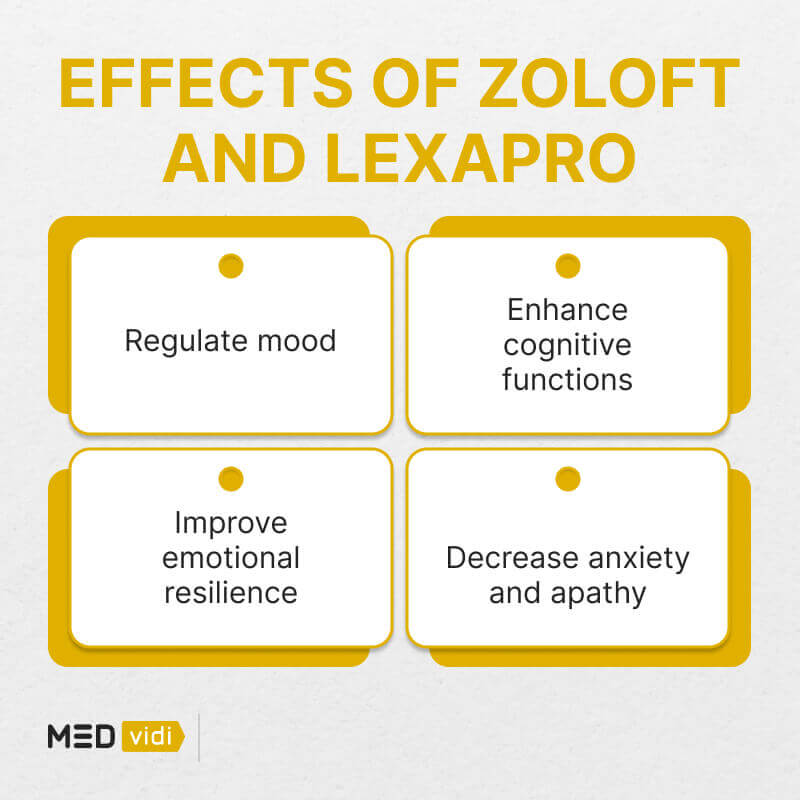
As selective serotonin reuptake inhibitors (SSRIs), Lexapro and Zoloft have a similar mechanism of action. Their primary function is to inhibit the serotonin reuptake by nerve cells, thus preventing its reabsorption and consequently elevating its levels in the brain.
Serotonin is a neurotransmitter that plays a crucial role in regulating mood and cognitive functions. So, its higher levels can enhance mood and alleviate symptoms of anxiety and depression.
How Long Do Lexapro and Zoloft Take to Start Working
It can take up to several weeks to feel the full effects from Lexapro and Zoloft. The medication will start working in your body right away, but you have to take it for a while to see how your body will respond. It is usually recommended to take an SSRI for 6 to 8 weeks before determining if that medication is working for you.
How Long Do You Need to Take Lexapro vs Zoloft?
Both Lexapro and Zoloft are typically prescribed for long-term treatment, from a few months to years. The duration varies based on an individual’s diagnosis, health history, and response to the prescribed medication.
In most cases, individuals are advised to continue the medication for up to six months after symptom improvement to reduce the risk of recurrence. However, the exact period should be decided in consultation with your healthcare provider, and it’s essential to follow their instructions.
In addition, it’s important to note that neither medication should be discontinued abruptly or without talking with a healthcare provider. They will create a tapering schedule you should follow to reduce the dosage gradually and avoid withdrawal symptoms.
Lexapro vs Zoloft: Dosing and How to Take Them Safely
To increase the chances for effective treatment, you have to use the right dosage depending on your condition. Your healthcare provider will determine if there is a need to adjust the dosage during the treatment process based on how your body responds to the medication, your age, and medical history. Carefully follow instructions and consult your provider for any questions.
The dosage information provided below is based on standard usage and doesn’t consider individual requirements. Don’t stop taking your medication or change your dose without your healthcare provider’s guidance.
Lexapro Dosage and Administration
Lexapro is taken
- Major depressive disorder. The recommended dose for adults is 10 mg once daily. Your provider may increase your dosage to a maximum of 20 mg if necessary.
- Generalized anxiety disorder. The recommended dose for adults is 10 mg once daily. Your provider may increase your dosage to a maximum of 20 mg if necessary.
Zoloft Dosage and Administration
- Major depressive disorder. Initiated with 50 mg daily; dosage may be gradually increased up to a maximum of 200 mg if necessary.
- Obsessive-compulsive disorder. Starts with 50 mg daily for adults; the dose can be increased up to a maximum of 200 mg if required. A smaller dose may be used for children.
- Panic disorder, post-traumatic stress disorder, social anxiety disorder. The initial dose is 25 mg daily, which can be increased up to a maximum of 200 mg as prescribed.
- Premenstrual dysphoric disorder (PMDD). The recommended dose for women with PMDD is 50 mg daily, with potential adjustments up to a maximum of 150 mg daily. You can follow your doctor’s advice to use the medication daily or intermittently, during the luteal phase of your menstrual cycle.
Side Effects of Lexapro vs Zoloft
While Zoloft and Lexapro can effectively treat depression and anxiety, they may also cause side effects. They may happen because of the effect of the medicine on your body, your individual response, dosage, or other factors.
Usually, the most common side effects go away once your body starts getting used to the medication. However, in some cases, the side effects may continue for longer, become bothersome, or cause discomfort. In case of severe side effects, you may need to consult your healthcare provider about changing your dosage or switching to an alternative medication.
Common Side Effects of Lexapro and Zoloft
Both Lexapro and Zoloft can cause:
- Agitation and restlessness
- Stomach issues
- Difficulty sleeping
- Dizziness
- Nausea
- Dry mouth
- Changes in appetite
- Fatigue
- Headaches
Zoloft may also cause tremors.

Possible Serious Side Effects of Lexapro and Zoloft
Some side effects require immediate medical attention:
- Serotonin syndrome: A potentially fatal medical emergency caused by an excess of serotonin. Symptoms to watch out for include hallucinations, seizures, and agitation
- Suicidal thoughts and behaviors
- Seizures
- Manic and hypomanic episodes
- Increased risk of bleeding (especially with the concomitant use of blood thinners such as warfarin, aspirin, or NSAIDs)
- Angle-closure glaucoma
- Serious allergic reactions
- Hyponatremia: Characterized by headaches, concentration difficulties, memory loss, confusion, weakness, and unsteadiness
- Irregular heartbeat
- Excessive dizziness which increases the risk of falls
- Priapism (prolonged erection)
If you’re experiencing suicidal or self-harming thoughts and require immediate assistance, contact a crisis hotline, such as 911, 988 suicide & crisis lifeline (toll-free), or Samaritans (116-123 or via chat).
The list above is not exhaustive, and different patients may experience different adverse reactions. Consult your healthcare provider to make sure any other health conditions do not increase the risk for side effects.
You may use Lexapro or Zoloft during pregnancy and breastfeeding only if the benefits outweigh the risks to the baby.
Sexual Side Effects
Sexual dysfunction is a
Do Zoloft or Lexapro Cause Weight Gain?
The effects of antidepressants on weight differ depending on the medication class and individual response.
In the clinical trials for both medications, weight gain or loss was seen in patients. Some symptoms of depression and anxiety, as well as their resolution after you start taking Lexapro or Zoloft, can also cause your appetite to change, which may lead to weight gain or loss.
Interactions of Lexapro and Zoloft
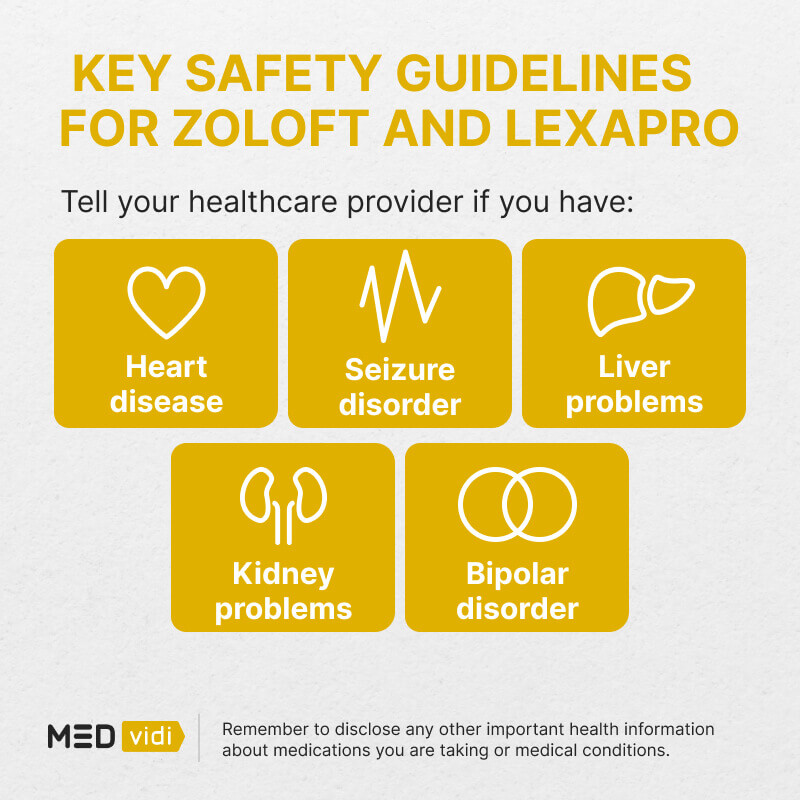
While Lexapro and Zoloft can effectively manage and treat depression and anxiety, they are not suitable for everyone. They may not be a good choice for individuals with certain medical conditions, such as seizures, glaucoma, etc. Some medications, foods, herbs, and supplements may also interact with these SSRIs and change their effect on the body, potentially causing side effects.
Considering possible interactions, remember to ask about them during your consultation with a healthcare provider. Discuss all prescription and non-prescription medicines, herbs, and supplements you may be taking to help a healthcare provider ensure that a medication is safe for you. Also, disclose any existing health conditions, if any, to help you avoid adverse effects.
Drug Interactions
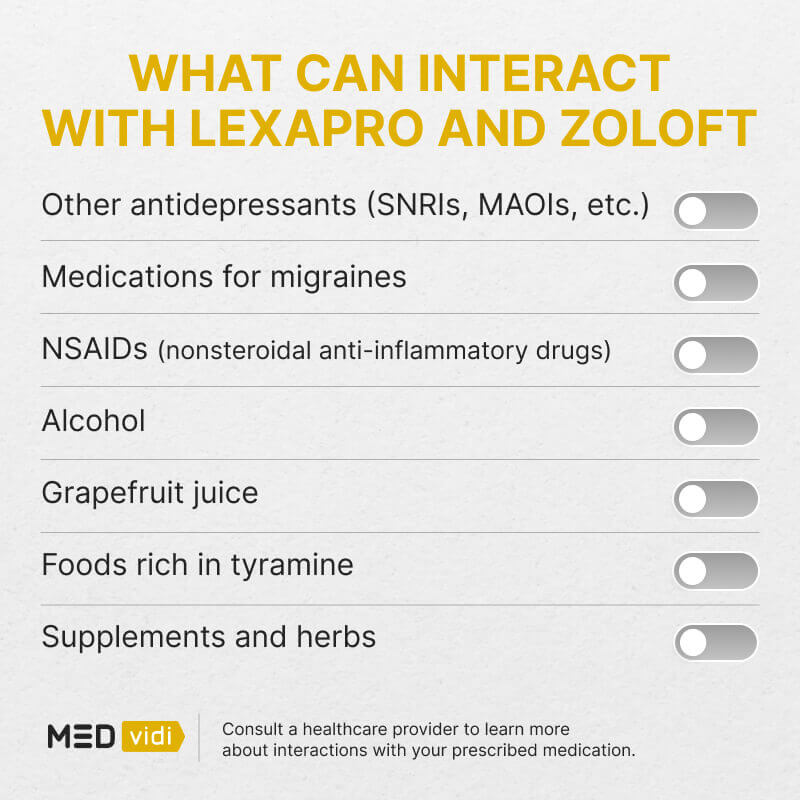
Since both Lexapro and Zoloft are antidepressants and belong to the same category of SSRIs, they share potential drug interactions with similar medications, such as:
- Serotonin-norepinephrine reuptake Inhibitors (SNRIs).
- Tricyclic antidepressants (TCAs).
- Monoamine oxidase inhibitors (MAOIs).
- Triptans (medications for treating migraines) such as Imitrex (sumatriptan).
- Macrolide antibiotics such as Zithromax (azithromycin).
- NSAIDs (nonsteroidal anti-inflammatory drugs) like Mobic (meloxicam).
- Painkillers such as Ultram (tramadol).
- Alcohol
- Grapefruit or any juices or foods with grapefruit
- Foods rich in tyramine, such as aged cheese, pepperoni, or salami
- St. John’s wort
Note that the above-mentioned list of interactions is not exhaustive, it’s essential to read the label carefully and consult your healthcare provider.
Warnings for Lexapro and Zoloft
The FDA has a black box warning that states Lexapro and Zoloft can increase the risk of suicidal thoughts and behaviors in certain people, so the signs of such effects should be monitored. The risk is higher among children, adolescents, and young adults up to age 24, but it’s important to be aware of such effects even if you are older than 24.
Withdrawal Symptoms
Although antidepressants are not addictive, they may cause withdrawal effects if you discontinue them abruptly. This is because your body can get used to the medication. Examples of these symptoms include:
- Anxiety
- Mood swings or irritability
- Suicidal thoughts
- Fatigue or dizziness
- Weight changes
- Nausea
- Headaches
- Insomnia
- Flu-like symptoms
- “Brain zaps” (a feeling of small electrical shocks in your head)
Withdrawal symptoms may last for up to two weeks but the duration depends on many factors, and not everyone experiences them. To avoid or manage withdrawal symptoms, talk with your healthcare provider before stopping your medication.
Which Antidepressant Might Be Better for You?
Determining which antidepressant is correct for you can take time and requires an overview of different factors.
First, the choice depends on the condition being treated. For example, in clinical trials, both Lexapro and Zoloft were effective for treating major depressive disorder but only Lexapro was also approved for generalized anxiety disorder. Zoloft may be used off-label to treat GAD, but your healthcare provider may be more likely to prescribe another, first-line medication. This can also be true for the other conditions Zoloft is approved for, such as panic disorder, post-traumatic stress disorder, and others.
Additional factors that may be considered when choosing a medication for you include the medications you’ve taken previously, if you have concerns about specific side effects such as gastrointestinal, weight changes, sexual or sleep side effects, and if you have any other conditions like bipolar disorder, seizure disorders. If you are pregnant or planning to be, it can also affect your treatment plan.
The best antidepressant can vary from one person to another and it’s important to work closely with your healthcare provider to determine which one is the best fit. You can connect with a licensed provider online at MEDvidi for an assessment and receive a treatment plan for anxiety or depression right from home.
Cost and Accessibility
Brand-name Lexapro costs around $470 to $570 while generic escitalopram comes at $7 to $60, with lower prices available due to coupons like GoodRx. Zoloft has a similar price gap with the brand version being available at $420 to $540 and generic sertraline at $7 to $33. The prices vary among pharmacies and locations; also, depending on your insurance plan, medication costs may be covered.
Switching Between Lexapro and Zoloft
Not all antidepressants work the same way for each patient. Therefore, if one medication does not provide satisfactory results, your healthcare provider may choose a suitable alternative. Sometimes, it may include switching from Lexapro to Zoloft or vice versa.
The most common way to switch medications is to taper off the current medication for up to a few weeks and then start the new medication at a low dosage and increase it gradually. However, sometimes, a clinician may recommend another way of switching these two medications, so you have to discuss the plan and follow the instructions to reduce side effects and increase the chances for effective treatment.
Can You Take Lexapro and Zoloft Together?
Combining Lexapro and Zoloft is generally not recommended. Both are selective serotonin reuptake inhibitors (SSRIs) that increase serotonin levels in the brain. Concurrent use may lead to a dangerous side effect called serotonin syndrome. Always consult your medical provider for personalized advice when considering or switching medications.
What to Ask Your Provider
If you believe an antidepressant may be helpful for you, talk with your healthcare provider. It’s important to make a list of questions to discuss with them at your appointment, for example:
- Will an antidepressant help my symptoms?
- How long will it take an antidepressant to work?
- Which antidepressant may be the best fit for me? What if it doesn’t work?
- What side effects should I be aware of with this medication?
Your healthcare provider may also suggest other medications or non-medication options to help your symptoms. This could be a recommendation to use cognitive-behavioral therapy (CBT), have lifestyle changes, or to alter your social support.
In Conclusion
According to research and clinical use, both Lexapro and Zoloft have proven efficacy and tolerability for depression and anxiety. They have several similarities but also have differences despite belonging to the same class of SSRIs. Talk to a provider online to learn what treatment is more suitable for you. Book your appointment today and get support in 24 hours.
Frequently Asked Questions About Lexapro and Zoloft
Is Zoloft stronger than Lexapro?
How much of Zoloft is equivalent to Lexapro?
Are Lexapro and Zoloft energizing or sedating?
What is the best SSRI for anxiety?
The most commonly prescribed SSRIs for anxiety with proven effectiveness for this condition include sertraline (Zoloft), escitalopram (Lexapro), citalopram (Celexa), fluoxetine (Prozac), and paroxetine (Paxil). The best medication will depend on the specific person as well as their condition, symptoms, other medications, and any other health conditions.
Which works better, Zoloft or Lexapro?
It’s hard to tell if Lexapro is better than Zoloft or vice versa. Both are considered effective medications for the conditions they are FDA-approved to treat. Talk with your healthcare provider about your specific condition and symptoms to learn which medication may work better for you.
Why do people switch from Lexapro to Zoloft?
Is Lexapro or Zoloft better for intrusive thoughts?
If you have intrusive thoughts related to major depressive disorder (MDD), either Lexapro or Zoloft may work to treat these symptoms. But if your intrusive thoughts are related to another condition such as bipolar disorder, it’s unlikely that either medication will work and, in fact, may be harmful for you to take. Never take any new medication without talking to your healthcare provider.