




Highlights
- Adult ADHD is common, and many people don’t receive the right diagnosis (or treatment) until later in life.
- Untreated ADHD can affect work, relationships, emotional health, and daily responsibilities, but treatment makes a big difference.
- Treatment for adult ADHD usually involves medication, therapy, and lifestyle changes. ADHD is lifelong, but with the right care, most people see meaningful improvements.
Attention-deficit hyperactivity disorder (ADHD) is sometimes thought of as a condition that only affects children. But we now understand that
ADHD is highly manageable, and it doesn’t have to hold you back. But without the right treatment, it can have significant negative effects on your life and functioning. Today, we’ll go over what untreated ADHD looks like in adults, and talk about why it’s so important to get a diagnosis and treatment.
What Adult ADHD Is and How It Shows Up
Adult ADHD isn’t a separate diagnosis; it’s just a term we use to describe when ADHD symptoms continue to affect people into adulthood.
The officially recognized symptoms of ADHD are the same regardless of age. But they often manifest differently in adults. The treatment methods that are recommended and approved are also different in children vs. adults.
We used to believe that children “grew out of” ADHD, but research now suggests that this isn’t true. Some children do experience less severe symptoms as they get older. But generally, children with ADHD become adults with ADHD. It’s critical to continue treatment so your symptoms stay well-managed.
It’s also important to note that although millions of adults live with ADHD, you can’t suddenly develop it as an adult. ADHD is a neurodevelopmental condition, which means it occurs as your brain is developing in childhood. If you live with ADHD now, you had symptoms in childhood, even if no one noticed them back then.
But it’s also true that many adults with ADHD don’t get the right diagnosis until much later in life. You may have been misdiagnosed with a mental health condition or simply have fallen through the cracks if your symptoms didn’t meet the classic hyperactive presentation of ADHD.
No matter how old you are, you deserve to get the right diagnosis so you can access the most effective treatment.
Symptoms of ADHD in Adults
ADHD symptoms can generally be divided into two categories: inattention and hyperactivity. In adults,
Inattentive ADHD Symptoms in Adults
Some of the ways that inattention can show up in adults with untreated ADHD include:
- Difficulty focusing. You have a hard time paying attention, either at work/school or in your personal life. For example, you might frequently zone out during movies or conversations.
- Hard time following instructions. You might need people to repeat themselves frequently, especially when they’re giving you multi-step instructions.
- Forgetfulness. You often forget things, including important deadlines and appointments.
- Losing things. You misplace things constantly, including the ones you need in your daily life, like your phone and wallet.
- Disorganization. You feel scattered with both time and your physical space. Your work or living space may be very messy.
Hyperactive-Impulsive Symptoms in Adults
Hyperactivity can show up differently in adults than it does in children. Instead of “jumping off the walls,” it can look more like internal restlessness.
- Feeling driven by a motor. You might feel like you constantly need to be on the go, even when there are no external pressures.
- Fidgeting. Adults with ADHD have often learned how to fidget without disrupting those around them. Instead of running around in circles, you might twirl your pen or tap your foot.
- Impulsive or reckless behaviors. Impulsiveness is among major symptoms of untreated ADHD. In adults, this can show up as reckless behaviors. You might spend too much money, use substances, or engage in risky sex without thinking about the consequences. It feels hard for you to restrain yourself when you want something.
- Blurting things out or talking a lot. Adults with ADHD are often told by others that they talk “too much.” You might find it hard to stop yourself from interrupting during conversations or waiting your turn.
Other Adult ADHD Signs
There are also other signs that you might be living with untreated adult ADHD that don’t fall into either category.
- Emotional dysregulation. Most people with ADHD have a hard time managing strong emotions. This might mean that you have angry or emotional outbursts or feel things more deeply than other people seem to.
- Executive function difficulties. Adult ADHD affects executive functioning, which includes higher-level cognitive skills like reasoning, decision-making, and motivation. It may feel nearly impossible to motivate yourself to perform tasks like housework or paying bills.
- Hyperfocus. ADHD makes it hard to transition your focus and attention away from one activity and onto something else, especially if the first thing is more interesting to you. You might become so focused on certain tasks that you lose track of time. Many people become so engrossed that they even forget to eat or take care of themselves.

Is ADHD in Women and Men Different?
ADHD affects people of all genders. But there are differences in how it manifests and is diagnosed between sexes.
Here are some main differences:
- Disparities in diagnosis: Females are
less likely[3] to receive an ADHD diagnosis. This may be because males are more likely to have hyperactive and impulsive behaviors as children, which are more pronounced and disruptive. Provider bias also plays a role. ADHD has historically been thought of as a condition that primarily affects boys. This has left many girls and women undiagnosed. - Presentation: Males with ADHD tend to be more likely to have externalizing behaviors, including impulsivity and hyperactivity, which can result in disruptive behavior. In females with ADHD, internalizing behaviors, such as forgetfulness, disorganization, and inattentiveness, tend to be more common. But anyone can experience any type of ADHD, regardless of sex or gender.
- Comorbid conditions: Males with ADHD are most likely to be diagnosed with
conduct disorder[4] or oppositional defiant disorder as comorbid conditions. Females with ADHD tend to have co-occurring mood disorders likedepression and anxiety[5] .
Why ADHD Often Goes Untreated in Adults
There are many valid reasons why so many adults with ADHD find themselves without the treatment they need.
- Lack of awareness: The way we understand ADHD is changing. But for a long time, children were only diagnosed with ADHD if they had significant academic or behavioral problems. This meant that many people with ADHD who were “good” students were never diagnosed as kids.
- Provider bias: Similarly, many providers, especially in earlier decades, held an implicit bias about what ADHD looks like — the hyperactivity symptoms that are often seen in young boys. Because of this, many people who didn’t meet this fixed view either weren’t diagnosed or were misdiagnosed with another condition.
- Masking: Many children, especially girls, with ADHD learn to “mask,” which means they learn how to mimic neurotypical behaviors to hide their ADHD symptoms. This can help them be more “accepted” into neurotypical society, but it also comes with significant drawbacks, including lack of diagnosis and treatment.
- Stigma: Although we’ve come a long way, there continues to be a stigma against neurodevelopmental conditions like ADHD. Some parents may not take their children to get assessed for ADHD because of this stigma, which leaves adults without a diagnosis. Some may also refuse treatment even in adulthood.
- Lack of access: If you’re underinsured or live in an area without enough mental health resources, then it may have been difficult for you to get the diagnosis and treatment you need. Now, with online services available, you can get assessed for ADHD and receive treatment right from home.
Long-Term Effects of Untreated ADHD in Adults
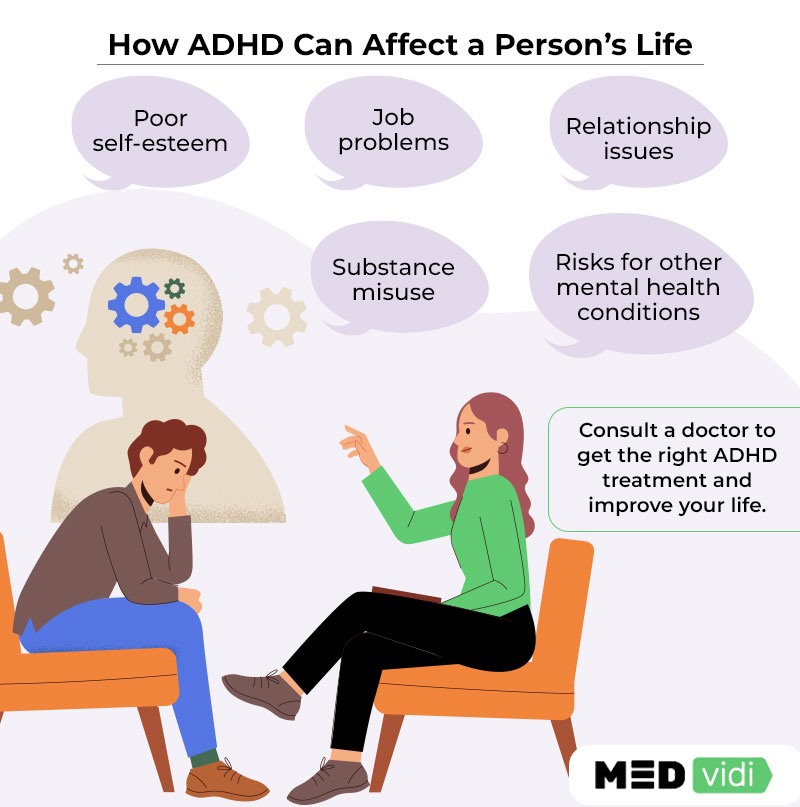
ADHD is manageable, and people with this condition can live fulfilling and successful lives. But it requires professional treatment. When it’s left unaddressed, it can have negative long-term effects in every area of your life.
Work and Career
Untreated ADHD can make it very challenging to meet demands at work. It may be harder for someone with ADHD to manage tasks that depend on routine behaviors or tight deadlines. Keeping track of instructions or collaborating closely with coworkers can also be more difficult. You may feel that your focus or motivation doesn’t match what you expect from yourself at work.
Relationship Issues
Many adults with untreated ADHD find that their unmanaged symptoms — especially emotional dysregulation — can negatively impact their important relationships. You might experience strong feelings like impatience, irritation, and anger that are challenging to control.
Other ADHD symptoms can play a role as well. You might get distracted during conversations, which could leave your partner or friends feeling unheard and undervalued. You might engage in impulsive behavior and do things you regret later.
Mental Health
Living with unmanaged ADHD can worsen your mental health. Many adults with untreated ADHD have low self-esteem because of always being told “you’re lazy” or “you’re not meeting your potential.” If you don’t know that ADHD impacts your behavior, you can start to internalize those comments instead of understanding that your brain just works in a different way.
It’s also common for people with ADHD to have comorbid conditions, like anxiety and depression.
Financial Issues
People with ADHD often struggle more with finances. Inattention can lead to missed bills or forgotten payments. Impulsivity can result in unplanned purchases. Everything that has to do with money — including planning or budgeting — can feel completely overwhelming.
This is such a common problem that people have labeled it the “ADHD tax” — when you end up spending much more money than other people due to your symptoms (like forgetting to cancel a subscription).
Substance Abuse
Some people worry about the risk of abuse with effective stimulant ADHD medications. But taking these medications to manage your symptoms actually lowers your risk of developing substance use disorder.
Safety
General Health
Untreated ADHD in adults can also make it challenging to keep up with regular healthcare routines. You might have a hard time with daily self-care routines (like teeth-brushing) or miss appointments or prescriptions. You might also struggle with maintaining a healthy diet and getting enough restful sleep. All of these factors can increase your risk of developing more serious long-term health conditions in the future.
Comorbidities and Overlap With Other Conditions
ADHD rarely exists in a vacuum. It’s estimated that about
Working with a mental health professional can help you get the right diagnosis, so that your treatment plan can be tailored appropriately.
Can Untreated ADHD Cause Anxiety?
Untreated ADHD doesn’t directly cause anxiety. The causes of anxiety are complex and multifold. But ADHD can cause significant stress in your life, and stress is a risk factor for anxiety. In fact,
Can Untreated ADHD Cause Depression?
Treatment, Self-Help, and Support Options
The good news is that ADHD can be successfully managed. Effective treatment for adult ADHD usually involves more than one method, typically involving a combination of medication, therapy, and lifestyle changes.
ADHD medication can adjust certain brain chemicals to improve attention or reduce impulsive behaviors. Some of the most effective ADHD medications include:
Therapy or coaching for ADHD can help you build practical systems that make daily tasks feel less overwhelming. It can also help you understand your symptoms more clearly and use tools that make life easier.
Lifestyle changes can also help you manage symptoms. Examples include:
- Creating consistent routines for sleep or daily responsibilities
- Getting regular exercise
- Simplifying your environment or calendar
These self-help tips cannot replace professional care. Although together with therapy — and medication, if appropriate, — they can make a big difference.
When to Seek Help
If you relate to some of the symptoms of adult ADHD, then it could be beneficial to get a professional evaluation by a healthcare provider. The only way to know whether or not you live with ADHD is to get evaluated by a professional. A provider will ask you to fill out questionnaires, review your symptoms and their impact on your daily life, and offer suitable treatment options.
In Conclusion
ADHD isn’t “curable,” which means you’ll always live with it — but it can be managed. Treatment can help you reduce the symptoms and even draw out the strengths that come along with ADHD.
But when the condition is left unaddressed, it can lead to significant long-term consequences. So, the first step is to get a diagnosis. Book an appointment today with one of our providers to learn which adult ADHD treatment approach may be most helpful for you.
Frequently Asked Questions
What happens if ADHD is left untreated in adults?
The risks of untreated ADHD include difficulty staying organized, managing responsibilities, or maintaining steady routines. Over time, these challenges can strain relationships or lead to problems at work. Sometimes, it can lead to physical injury if certain impulsive behaviors occur.
Can ADHD get worse if untreated?
ADHD itself doesn’t usually “get worse,” but it also doesn’t go away. And the demands of adult life can make untreated symptoms feel more disruptive.
What does untreated ADHD look like in adults?
Many adults with ADHD describe feeling scattered or stuck in cycles of procrastination. You might miss deadlines or have a hard time managing strong emotions.
What can untreated ADHD lead to?
Untreated ADHD can contribute to chronic stress or relationship conflict. It may also raise the likelihood of developing co-occurring conditions like anxiety or depression.
What are the causes of ADHD?
ADHD is rooted in neurodevelopmental differences that begin in childhood. Genetics and environmental factors also play a role.
Is untreated ADHD dangerous?
Yes, it can be. Untreated ADHD can raise the risk of accidents because impulsive decisions or lapses in attention may happen more often. It may also increase vulnerability to substance use issues or long-term stress.