




Crying is a uniquely human act, woven into the fabric of our lives from birth to the end. We cry at movies, burials, proposals, break-ups, and while cutting onions. No other animal cries the way we do. So, crying is, perhaps, part of what makes us human.
Across cultures, races, and ages, crying is a common, biologically
Highlights
- While crying can help you relax, it might not be a guaranteed fix for every situation.
- Crying may not have the same effect for everyone. The effects also depend on the type of tears.
- Crying can help cope with grief, regulate emotional response to the situation, reduce pain, and improve mood.
- In some cases, crying can make you feel worse. Uncontrolled crying or long-term willingness to cry often can be a sign of mental health concerns.
Does Crying Relieve Stress?
Yes, it does, but not all the time. Emotional tears can
In places and cultures where crying is linked with shame, it can worsen mood. Men may be more prone to experiencing this, because traditionally, crying is more socially acceptable in women. But if you are in a supportive social environment, crying can create a sense of relief and help you feel better.
How Does Crying Relieve Stress?
Crying relieves stress by nudging your body to recover from stressful experiences. It triggers through biological and social mechanisms that can calm your mind and body. Some mechanisms involved include the release of stress hormones, activation of the parasympathetic nervous system, and emotional processing.
Parasympathetic Nervous System Downshift
Crying typically happens during your body’s “fight-or-flight” response. Yet, as crying continues, it
Emotional Processing
Crying gives us a chance to
Social Support
Other people around you typically respond to crying by showing empathy and support. When you cry, even when you don’t do it purposefully, it tells people around you that you are distressed. In response, they come around to help you.
Having people around can make you feel less isolated, more loved, and eventually make you feel better. Crying may also have an effect on how willing you are to receive help. If you feel more open to receiving it, that can help you get relief faster.
Is Crying Good for You?
Yes, crying can be good for you in socially acceptable contexts (or in private), especially if you feel better afterward. It is a natural response to emotional and physical stress, and everyone has a right to benefit from the relief that can come with it.
Also, tears are not the same, so their effects on your mood may differ. You typically shed
- Basal Tears: The tear ducts are always secreting this. Basal tears contain a lot of protein and have antibacterial properties. They help keep your eyes moist whenever you blink.
- Reflex Tears: These tears are released when something irritates the eyes, such as smoke, onions, etc. Reflex tears flush out these irritants.
- Emotional Tears: These are released as a response to strong emotions and stress and contain more stress hormones than other kinds of tears.
Crying stimulates the reduction of cortisol and stress hormones. Research shows that tears from emotional distress have high concentrations of protein, manganese, stress hormones, and other compounds. As such, crying can help your body deal with the stress response and lower its impact.
Emotional tears stimulate the release of several substances that also promote self-soothing. For example, in response to crying, your body releases oxytocin and endorphins into your system. These are hormones that can
When Is Crying Considered Healthy and When It’s Not?
Crying is considered healthy when:
- You can pinpoint why you are crying. This may be emotional, e.g., after a breakup or physical pain, such as after you jam your finger in the door.
- You feel comforted, relieved, or supported afterward.
- You can reflect on the circumstances.
- You don’t notice any adverse effects on your health.
But there are times when crying can be a sign that something unhealthy is going on. Crying
- Becomes too frequent and uncontrollable. And you often don’t know why you are crying.
- Makes you feel more helpless and isolated than before, or makes you feel less of a human being.
- Interferes with your daily life and keeps you from doing what you should.
- Drives you to self-harm.
If you feel this way, get help by speaking to a therapist.
Is It Bad to Hold Back Tears?
You can usually choose whether to cry or not. Is this a bad thing?
In the short term, no, it’s not. Choosing to delay your tears for a while until the setting is safe might be an acceptable form of emotional regulation. For example, you can delay your tears for a few minutes until you are out of an important corporate meeting.
However, holding back tears and repressing your feelings in the long term may increase psychological stress and emotional numbness. It
Benefits of Crying When Stressed
When stressed, a good cry at the right place and the right time can help you in the following ways:
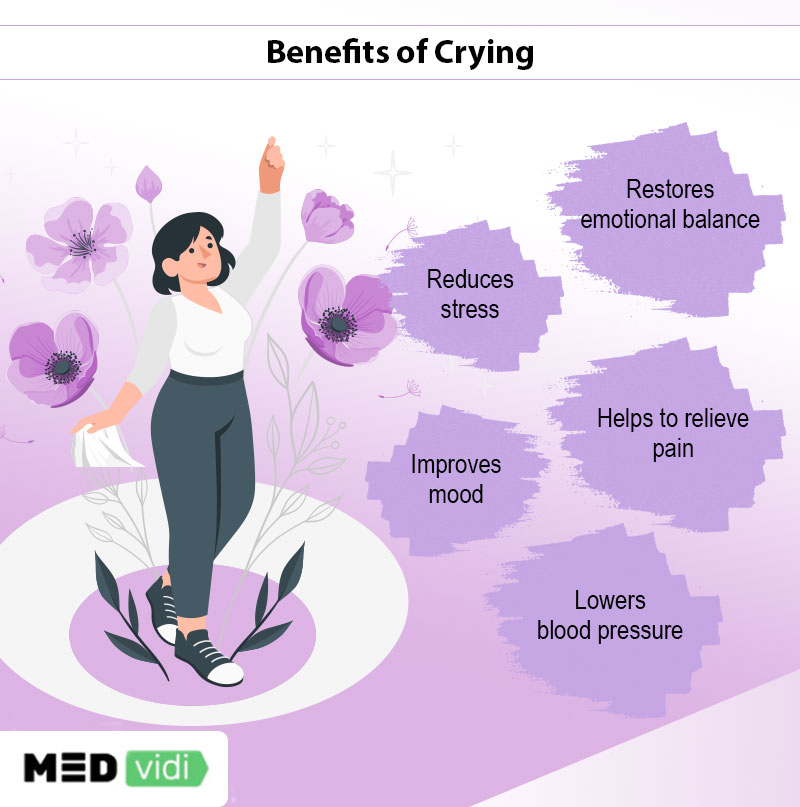
Improve Your Mood
Pain Relief
Oxytocin and endorphins are natural “painkillers.” They are released during weeping, so you may find that crying helps you feel less pain.
Coping With Grief
Grief is painful and confusing. Crying can help you process your emotions and feel less of the pain associated with grief. It can also help you “let go” and accept what has happened.
Reduce Blood Pressure
Crying usually begins during the “fight-or-flight “response, when our heart rate spikes and our blood pressure goes up, too. However, once we start crying, this response reduces significantly, and the release of endorphins promotes relaxation and leads to lower heart rate and blood pressure.
Better Vision
Basal tears help us see more clearly, according to the
Can Crying Help With Anxiety or Depression?
While crying offers some relief from stress, it does not treat anxiety or depression. Anxiety and depression are mental conditions that differ from day-to-day stressful situations. They involve persistent patterns of mood, thought, and behaviour that require intervention.

Crying can be considered part of one’s emotional regulation when it:
- Signals people that they have to take a break and rest.
- Helps them communicate with and receive support from others.
- Helps people identify stressful situations around them.
In contrast, crying may suggest that you need a mental health evaluation if:
- You cry frequently without any identifiable triggers.
- You are anxious or depressed for most of the day, most days of the week.
- You experience sleep disturbances, appetite changes, unusual fatigue, or an unexplained and unplanned change in weight.
- You feel hopeless or feel the urge to harm yourself.
- You no longer enjoy things you used to love.
- You feel the need to run away and be alone.
What to Do After Crying (And If Stress Keeps Coming Back)
What you do after crying can help you feel relieved from stress for longer periods. You can choose activities that further regulate your nervous system and prevent rebound stress.
Quick 5-Minute Reset
Within 5 minutes after crying,
- Take a shower to cool your temperature, or pour some water over your face.
- Slow down your breathing. Take deep, slow breaths or try box breathing, a stress-reducing technique: inhale for 4 seconds, hold for 4, exhale for 4, and hold empty for 4 seconds. Doing this can help balance your nervous system, lower blood pressure, and improve focus.
- Ground your body by sitting with both feet on the floor and note what you feel, see, and hear.
- Drink a glass of water or tea.
- Listen to soothing music.
- Say a word of encouragement to yourself.
Long-Term Strategies
Long-term strategies for better stress control can include:
- Getting better sleep: 7–9 hours of sleep per day, with a consistent bedtime routine.
- Better daily routines and time management: Schedule both exercise and rest for a balanced well-being.
- Get hobbies that you enjoy.
- Develop your relationships and social support.
- Seek professional help, see a therapist if you feel overwhelmed.
When Crying Might Be a Concern
Crying is not a problem in itself. However, excessive, uncontrolled crying might point toward an underlying mental health issue rather than just an emotional response.
Mental health conditions like anxiety and depression can push people to cry a lot. And even though crying may relieve immediate symptoms, it won’t take the mental health conditions away.
If you think your crying may be the result of a mental health condition, seek professional help.
Summing Up
Crying is a natural human response to stress, not something reserved for a select group of people. The human body responds to crying by releasing “feel-good” hormones like oxytocin and endorphins, which help relieve pain and provide comfort. Crying also supports better emotional regulation and helps us receive support from people around us. While it might be helpful to hold back tears for the short term until the time and place is right to cry, holding back tears for too long can harm us emotionally and physically.
However, excessive, uncontrollable, or unexplained crying might suggest an underlying mental health condition that may require professional attention.