




Highlights
- A panic attack is a sudden episode of fear, fright, or overwhelming anxiety, accompanied by specific physical symptoms and thought patterns.
- A basic definition of panic disorder is having repeated, unexpected panic attacks, plus more than one month of either the fear of having more panic attacks, or changing behavior to avoid them.
- Not everyone who has panic attacks develops panic disorder.
- People with panic disorder are not the only ones who experience panic attacks; the episodes may also be associated with other mental health conditions.
Most people will experience at least one episode of extreme, uncontrollable worry or fear in their lives, especially during stressful times. But when is this reaction normal as opposed to being a panic attack or a symptom of panic disorder?
We’ll cover all of these topics. In no time, you’ll tell the difference between panic attacks and panic disorder, understand their everyday effects, and learn about management options.
What Is Panic Disorder and How Common Is It?
Panic disorder involves having repeated panic attacks, a fear of experiencing them again, and changes in behavior aimed at avoiding these episodes. It is a common anxiety disorder, affecting about
Panic Disorder vs. Panic Attacks
The shared word here is panic: a sudden, overpowering emotion linked with fear or worry. Most people will experience feelings of panic at some stage of their lives, but not all such episodes are a sign of a mental health condition.
Let’s first discuss panic attacks, as they form the foundation of understanding panic disorder.
What Is a Panic Attack?
A panic attack is an abnormal
Here’s what a panic attack feels like:
- It’s intense: an uncomfortable feeling or a sense of fear overwhelms you.
- It’s abrupt: it comes out of nowhere.
- It surges: its intensity increases quickly.
- It peaks within a few minutes: usually it
lasts 20 to 30 minutes[4] , rarely more than an hour.
In addition, specific signs and symptoms accompany it.

Signs and Symptoms of Panic Attacks
For a panic episode to be considered an ‘attack,’ there must be
- Physical symptoms
- A fast, hard heartbeat
- Shaking or trembling
- Sweating
- A feeling of suffocation or difficulty breathing
- A choking sensation
- Chest pain or discomfort
- Nausea, vomiting, or stomach pain
- Feeling weak and dizzy
- Numbness or tingling sensations
- Chills or heat sensations
- Thoughts
- Feelings of the world not being real, or a sense of being cut off from your body
- Fear of losing control or
becoming mentally unwell[5] - A fear of dying or impending doom
Panic disorder symptoms
How Is Panic Disorder Diagnosed?
Getting back to defining differences, it’s important to note that a single panic attack doesn’t mean you have a panic disorder.
Firstly, for a diagnosis of panic disorder,
Other diagnostic warning signs of panic disorder are that, for at least a month, you either:
- Experience intense, constant fear of having more panic attacks
- Change your behavior to avoid them
It’s a good idea to visit your primary care doctor or ER first to exclude unrelated physical problems
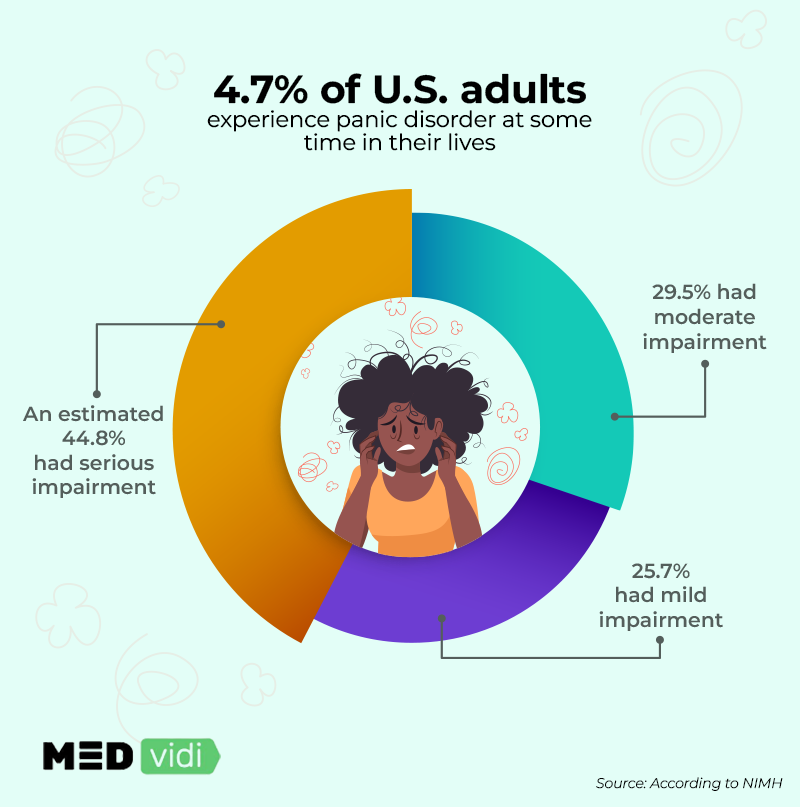
How Panic Disorder Can Affect Daily Life
Panic attack symptoms are often frightening, especially when you’re alone and when they cause embarrassment in social situations. Because they worry about having the next panic attack in public, people with panic disorder may go out of their way to avoid being around others; however, they might also avoid being alone because no help will be available.
So you can see that, if undiagnosed or untreated, panic disorder can have
Challenges with employment or completing studies[7] - Relationship issues
- Interference with daily activities
To minimize the effects of panic disorder on daily life, it’s important to seek mental health assessment and treatment. You can get anxiety treatment online at MEDvidi within 24 hours, all from the comfort of your home.
Related Conditions
According to research,
- Other anxiety disorders, such as agoraphobia, which involves the avoidance of everyday situations for fear of embarrassment or because help may not be available when needed
- Major depression
- Bipolar disorder
- Alcohol and substance use disorders
An unfortunate fact is that, overall, people with panic disorder may have
Panic Disorder and Panic Attacks: Causes and Risk Factors
Next, let’s look at why panic attacks happen.
Although the
- Stressful life events: Childhood trauma, death of a loved one, divorce, moving house, or becoming unemployed
- A family history: If your parent has panic disorder, there is a
40% chance[6] you will too - Personality characteristics: Being sensitive to stress, or lacking self-esteem
- Chemical changes in the way your brain functions
- Existing mental health conditions such as:
- Mood disorders: Major depression or bipolar disorder
Anxiety disorders[11] : Generalized anxiety disorder (GAD), specific phobias, obsessive-compulsive disorder (OCD), or post-traumatic stress disorder (PTSD)
Sometimes, there are no obvious panic attack triggers.
Treatment Options for Panic Disorder
To treat panic disorder successfully, you’ll usually need a combination of therapy and medication, but your healthcare provider will guide you on an appropriate treatment plan.
Medication
Antidepressants, in particular selective serotonin reuptake inhibitors (SSRIs), are first-line
- Selective serotonin reuptake inhibitors (SSRIs):
Paroxetine and fluoxetine[1] are particularly effective - Serotonin-norepinephrine reuptake inhibitors (SNRIs):
Venlafaxine[1] - Benzodiazepines: Alprazolam and diazepam
- Tricyclic antidepressants (TCAs): Clomipramine
Therapy
Speaking with a mental health professional about your anxiety may be beneficial if you frequently experience panic attacks. This is especially necessary if your fear of having an attack restricts your activities.
Cognitive-behavioral therapy (CBT) is a type of talk therapy commonly used for anxiety treatment. It helps to better understand the actions and thought patterns that might trigger or aggravate an attack and offers strategies to change them.
How to Reduce Panic Attacks
In addition to taking medication and going to therapy, there are a few other things you can try that may reduce the number or intensity of panic attacks.
- People with panic disorder should focus on a healthy lifestyle to keep their
brains and bodies healthy[13] :- Eating a balanced, healthy diet with regular meals helps keep blood sugar levels stable.
- Doing regular aerobic exercise reduces stress and anxiety, improves mood, and supports overall health.
- Avoiding caffeine, alcohol, and nicotine lowers the risk of anxiety.
- Educating yourself and understanding that the condition usually
requires lifelong treatment[4] might help to minimize the risk of panic attacks. - Joining support groups and getting advice from people going through the same difficulties can be calming due to knowing you are not alone.
- Keep a journal to identify if there are, in fact, any triggers that you can work on with your therapist.
However, should a panic attack occur, be prepared with a few strategies to make it settle faster.
What to Do During a Panic Attack
During a panic attack, the aim is to calm the fight-or-flight response. You need something immediate, so here are some proven ways to do this:
- Slow, controlled deep breaths in (expanding the chest and abdomen) and out, with pauses in between, are most effective.
- An easy one to remember is box breathing: breathe in for 4 counts, hold for 4; out for 4, and hold for 4.
- In the moment, choose a tense muscle group, for example, your jaw or shoulders.
- Consciously tense the muscles, then deliberately release the tension. Repeat this until the muscles are relaxed.
- Distract yourself by naming the blue objects in the room or counting backward in 7s from 100.
- Touch a piece of furniture and think about its temperature and texture, or rub your feet on the ground; this might help you get back into a sense of reality.
Move through each of these calming exercises until the panic has passed.
When to Seek Medical Help Immediately
Panic attacks and panic disorder can only be diagnosed and controlled when you seek help. So if, in the past, physical symptoms scared you and were accompanied by thoughts of losing control or dying, consider going to chat with your medical provider.
However, if you have any of the following, seek help immediately:
- Experiencing symptoms of potentially life-threatening illnesses, such as unexplained chest pain or shortness of breath.
- Recurring anxiety attacks with no trigger
- Having multiple panic attacks a day
- Panic and fear are affecting your everyday life negatively
Prognosis and Long-Term Outlook
Without medical assistance, controlling panic disorder can be challenging, if not impossible. People who start treatment early, reduce the number of panic attacks and anxiety, and continue to follow up with mental health providers, are more likely to stay in remission. So it’s important to seek help, get professional treatment, and learn self-help strategies to increase the chances of recovery.
Conclusion
Having panic attacks doesn’t automatically mean that you have panic disorder. However, recurrent or frequent panic attacks need investigation, and getting a panic disorder diagnosis and finding treatment early is crucial for recovery.
Make an online appointment with a MEDvidi healthcare provider to talk about your anxiety and panic attacks, get a diagnosis, and a treatment plan online.
FAQs
How many panic attacks are normal?
It is normal to experience a panic attack once in a while, especially when there are stressful circumstances. However, if you have daily panic attacks or less frequent panic attacks that have no obvious trigger, consult with a healthcare professional.
What are 5 signs of panic disorder?
Here are the 5 signs of panic disorder:
- You must experience panic attacks
- The panic attacks must be recurrent
- The panic attacks must have no trigger
For at least a month after an episode, you either: - Experience intense, constant fear of having more panic attacks, or
- Change your everyday behavior, trying to avoid panic attacks
What does a panic disorder feel like?
Is panic disorder genetic (hereditary)?
Yes, but genetics is only one risk factor for panic disorder. If a parent has it, there is a 40% chance their children might too.