




Highlights
- When vertigo is a symptom of anxiety or panic, it usually comes with other physical symptoms, such as tremors, a racing heart, and breathlessness.
- Anxiety and panic can cause vertigo and dizziness; on the other hand, the vertigo episodes are distressing and may further trigger anxiety. This creates an anxiety-vertigo vicious cycle.
- Treatment of anxiety-related vertigo usually involves a combination of psychological and physical therapy, as well as medication, if appropriate.
- Although anxiety can cause vertigo, other conditions can also trigger it. Only a healthcare provider can make an accurate diagnosis.
Your head is spinning, the room feels like it’s rocking, and your heart is pounding. You didn’t eat this morning because you were running late, and you’re nervous about the speech you’re about to give. What if you fail and embarrass yourself? Now, you also wonder if this spinning sensation — vertigo — is caused by anxiety, low blood sugar, or something else.
This article will help you to understand what’s happening, how to calm these symptoms, and when to urgently seek help in a situation like this.
Can Anxiety Cause Vertigo?
Up to half of people who visit doctors for help with vertigo or balance problems have co-occurring anxiety or depression. Anxiety can cause vertigo, but you’ll see as you read the article that the opposite is also true.
Some studies show that around 8 out of 10 people with long-term (chronic) dizziness also have a mental health condition, mainly anxiety.

What Does Anxiety-Induced Vertigo Feel Like?
Everyone reports anxiety-vertigo symptoms differently, but it’s usually described as a feeling of movement: a swaying, rocking, floating, or spinning sensation.
Vertigo vs. Dizziness
You shouldn’t confuse vertigo with
When vertigo-like symptoms or dizziness are caused by anxiety, they sometimes happen with other physical
- Rapid heartbeat or palpitations
- Sweating
- Shortness of breath
- Trembling
- Nausea
- Tingling or numb hands
How Anxiety Can Cause or Worsen Vertigo
Vertigo caused by anxiety happens because of how your hormones and nervous system respond to fear. They are the same reasons why anxiety can make existing vertigo worse.
Emotions and Balance Are Connected Through Shared Nerve Pathways
Your brain’s balance and emotion systems share nerve pathways and are physically connected in the threat-detection center, the amygdala. Sometimes, emotional signals get muddled and over- or under-stimulate the balance pathways, causing vertigo or dizziness.
Fight-or-Flight Response: A Vertigo-Anxiety Attack
When you’re in danger, your brain triggers the
- You’re constantly looking around you, in a heightened state of awareness.
- Your heart and lungs work harder and faster to get oxygen to your muscles.
- Your muscles tense up, ready to fight or flee.
Each of these mechanisms can result in vertigo, as explained below.
Increased Sensitivity to Visual Signals
When you feel anxious, the brain is hypervigilant to your body and the surroundings. Information coming from the eyes (visual dependence) to the balance system may override what’s coming from the inner ear, joints, and muscles, which can result in vertigo.
Hyperventilation and Breathing Changes
Panic causes rapid, shallow breathing to meet increased oxygen needs. But it also drops your blood carbon dioxide levels, which narrows blood vessels and decreases blood flow and oxygen delivery to your brain. This can cause dizziness and vertigo.
Maintained Tension of Muscles
The balance system focuses intensely on micro-movements to keep muscles and posture stiffened and balanced, ready to fight or run. This hyperfocus can actually trigger vertigo.
Possible Direct Stress Hormone Effects
Common Triggers of Anxiety-Related Vertigo
Now that you understand how anxiety triggers vertigo, knowing what situations might set it off will help you feel more in control.
Direct Effects of Mental Health Conditions
Acute anxiety[6] and panic attacks- Anxiety disorders, e.g., generalized anxiety disorder and panic disorder
- Mood disorders, e.g., depression
- Sleep disorders
- Prolonged stress
- Fear of another episode
Physical Health Influences
- Dehydration, low blood sugar, and fatigue
Medications[7] , e.g., anti-epileptics and antibiotics- Crowded or visually busy environments
- Sudden drops in blood pressure
- Existing inner ear disorders
- Benign paroxysmal positional vertigo (
BPPV[5] ): The most common cause of vertigo.The inner ear[7] has tiny crystals that help the brain know the head’s position. Sometimes these crystals come loose and float around where they shouldn’t. When this happens, they send confusing signals to the brain and cause vertigo. - Vestibular neuritis: Nerve inflammation, usually from a virus
- Labyrinthitis: Inner ear infections, usually from a virus
- Vestibular migraine: No headache, only vertigo
- Meniere’s disease: A build-up of
fluid and pressure[7] in the inner ear, associated with hearing loss and ringing
- Benign paroxysmal positional vertigo (
The Vertigo-Anxiety Cycle
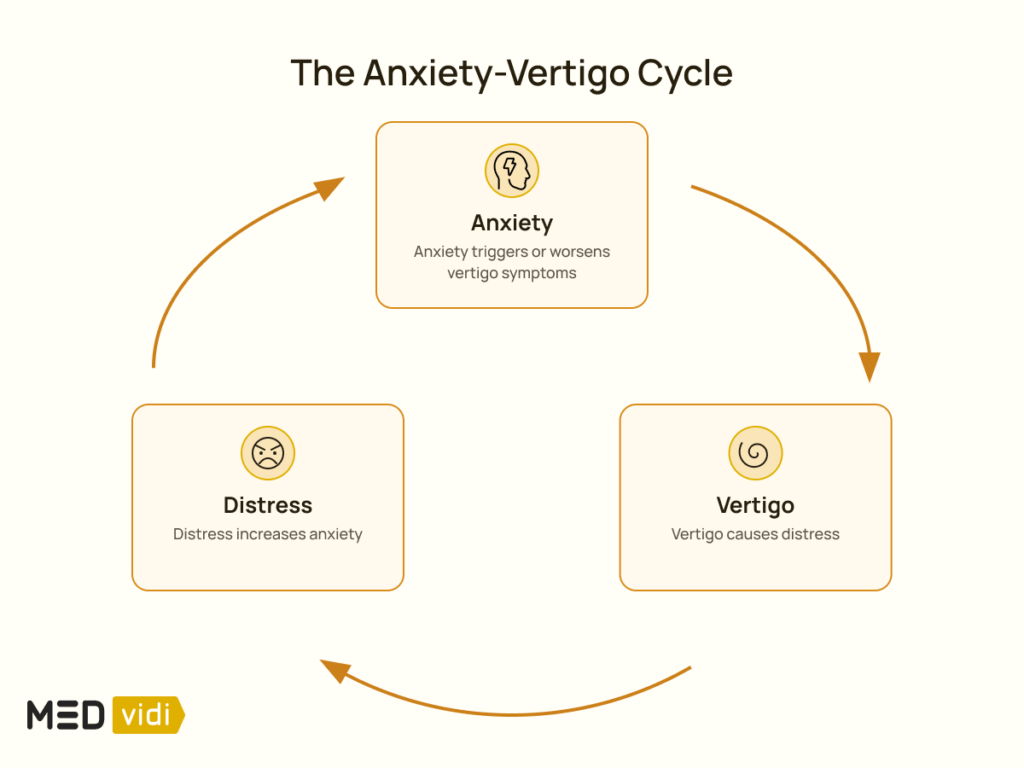
Next we’re going to look at the “vicious cycle” of anxiety and dizziness, or vertigo. We’ve discussed in detail how you get vertigo from anxiety, but vertigo can also cause anxiety.
- Step 1: Anxiety triggers or worsens vertigo or dizziness.
- Step 2: Vertigo and severe dizziness cause distress. One can’t stand upright or walk in a straight line. Sometimes, a person can’t move at all without the world spinning, feeling nauseous, or vomiting. If you’ve ever been incredibly seasick or alcohol-drunk, you’ll know the feeling.
- Step 3: This second wave of anxiety aggravates the vertigo severity.
- Step 4: When the vertigo gets even worse instead of settling, the panic escalates.
- Step 5 onwards: The cycle continues.
How to Calm Vertigo and Anxiety During an Episode
Once you have seen your healthcare practitioner has identified your vertigo’s cause, here are a few tips on how to calm the vertigo-anxiety cycle.
Make Sure You're Physically Safe
- Steady yourself by looking at a fixed object to give your brain a stable reference point.
- Move slowly.
- Hold on to walls and stable furniture.
- Find a quiet environment to avoid visual hypervigilance from taking over.
Control Your Breathing
- Take deep, slow breaths in and out to counteract hyperventilation.
- Deep breathing exercises also calm the fight-or-flight response.
Relaxation Techniques
- Progressive muscle relaxation not only eases anxiety, but reduces the muscle tension that aggravates vertigo.
- Mindfulness techniques can help reduce anxiety and weaken the anxiety-vertigo cycle.
Use Grounding Techniques
- Focus on your feet’s muscles and joints and the physical sensations they’re sending to your balance system.
- Imagine being rooted into the ground: a stable, physical surface.
Distract Yourself
- Name all the red things in the room.
- Count backward in sevens from 100.
Adjust Negative Thought Patterns
- Try not to judge or fight your brain’s behavior; it’s trying to help.
- Regain control by
reminding yourself[8] that although it’s distressing, it’s not dangerous and you’re unlikely to fall.
How Is Anxiety-Related Vertigo Treated?
Your healthcare professional will conduct a comprehensive health evaluation to exclude physical or medical causes that might be triggering or aggravating the vertigo. This may also involve a referral to an ear, nose, and throat (ENT) specialist.
The long-term treatment options that help get rid of anxiety-related vertigo are often a combination of physical and psychological treatment. It is necessary to manage anxiety triggers, chronic stress levels, and support the balance system to break the cycle.
Supportive Daily Habits
The foundation of any treatment plan is a healthy lifestyle that supports the brain and body’s ability to function well. This means:
- Eating a balanced, healthy diet and staying hydrated
- Getting regular physical activity
- Keeping a consistent, relaxing bedtime routine
Relaxation is a skill, not something that happens easily, especially in a moment of panic. So, mindfulness meditation and breathing techniques work best when practiced daily.
Treating Anxiety and Panic
A critical treatment step is to reduce anxiety and regulate mood. This starts with visiting a clinician to exclude a physical cause of vertigo; people are often worried that it is a symptom of a serious medical condition, and eliminating this may reduce anxiety.
Cognitive-behavioral therapy (CBT) is another common way to manage anxiety. CBT aims to help change thoughts that escalate anxiety. Some examples of thought patterns and behaviors related to vertigo that can be changed are:
- Thinking that vertigo is dangerous and will never settle.
- A fear of falling and embarrassing oneself.
- Constant body scanning for signs of being unsteady or dizzy.
Anti-anxiety medications might be appropriate, even in situations of physical illness-triggered dizziness and vertigo, such as brain and balance disorders. When prescribed,
Helping the Balance System for Inner Ear Problems
Vestibular rehabilitation therapy (VRT) trains the brain to rely more on input from the eyes, muscles, and joints for maintaining balance. A vestibular physiotherapist will do this through repeating vertigo-causing maneuvers in safe environments, balance training, and exercises that stabilize eye movements.
When to Urgently Seek Professional Help
If you experience any of the following red flag symptoms together with dizziness, vertigo, or anxiety, seek immediate medical attention:
Slurred speech[7] - Numbness or drooping in your face
- Double, blurred, or a sudden change in vision
- Weakness or numbness in your arms and legs
- Trouble walking or extreme clumsiness
- Fainting,
collapsing[7] , or confusion Difficulty swallowing[7] - A new, different, or unusually severe headache
- Vertigo starts after a head injury
- Vertigo happens with
chest pain, shortness of breath, or an irregular heartbeat[7] - Sudden hearing loss or new intense ringing in your ears
Conclusion
Anxiety and vertigo symptoms feed each other, but anxiety-related vertigo is treatable, and you don’t have to figure it out on your own. Take the first step and book a virtual consultation with one of MEDvidi’s healthcare providers to get anxiety treatment online.
FAQs
Can a panic attack cause vertigo?
Yes, a panic attack can cause vertigo. The fight-or-flight response causes hypervigilance and muscle tension, which draw attention to any off-balance feeling. Also, the emotion and balance systems share nerve pathways in the brain, and one might mistakenly trigger the other.
Can anxiety make vertigo-related conditions worse?
Yes, anxiety can make vertigo-related conditions worse. Reasons include: (a) the balance and emotion systems share nerve pathways and (b) anxiety attack-related hypervigilance and muscle tension draw attention to the off-balance feeling.
Is visual vertigo related to anxiety?
Visual vertigo and anxiety can be related. During the stress response, the brain is on high alert to the surroundings, looking out for danger. The balance system is preoccupied with Information from the eyes (visual dependence), ignoring what’s coming from the inner ear, joints, and muscles, causing issues with balance, dizziness, or vertigo.
Does anxiety-related vertigo go away?
Yes, anxiety-related vertigo can go away if the anxiety is managed. If you have anxiety and vertigo, you should consult a healthcare practitioner and discuss your next steps.
How long does anxiety vertigo typically last?
Anxiety-related vertigo and dizziness can last anywhere from a few seconds during a panic attack to weeks or months if triggered by chronic stress. If your symptoms don’t improve, keep coming back, or interfere with your daily life, it’s recommended to seek medical attention.
How do I know if my vertigo is caused by anxiety?
If you suspect your vertigo is caused by anxiety, always consult a healthcare professional to rule out physical or medical causes and discuss management options.
How to break the vertigo-anxiety cycle?
Breaking the vertigo-anxiety cycle often requires a combination of psychological and physical therapy and medication, if appropriate. However, consulting with a healthcare professional is the first step — they will assess your symptoms and health history and create a personalized treatment plan.