




Pristiq has a
Highlights
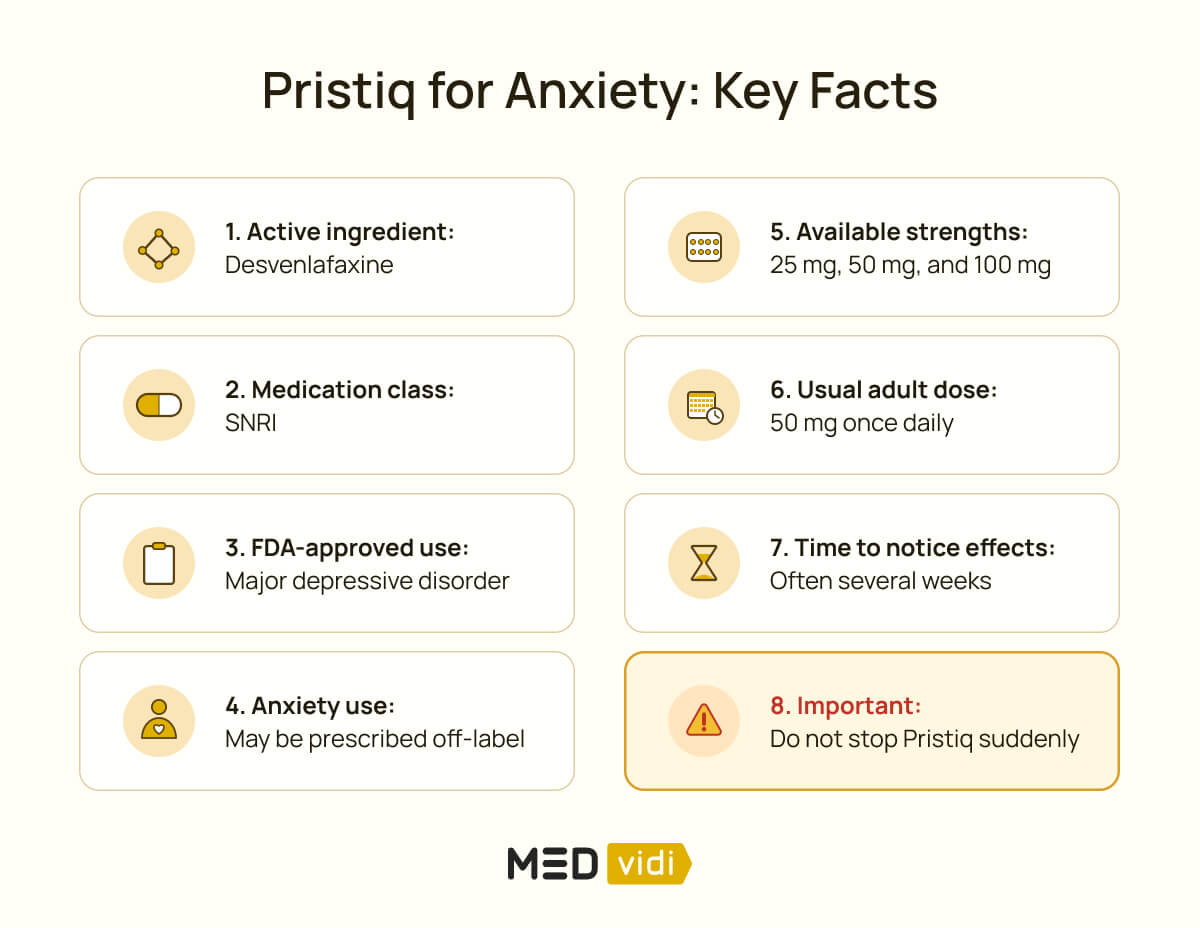
- Pristiq is FDA-approved for major depression but can be used off-label for panic disorder and anxiety.
- As an SNRI (serotonin-norepinephrine reuptake inhibitor), Pristiq affects two neurotransmitters called serotonin and norepinephrine to calm your nervous system.
- It can take up to 6 weeks to see the effects of Pristiq.
Anxiety disorders affect
What Is Pristiq?
Pristiq’s active ingredient is desvenlafaxine, a member of the class of antidepressants known as serotonin-norepinephrine reuptake inhibitors (SNRIs). Although the FDA only approved this medication for the treatment of major depressive disorder (MDD), medical providers may prescribe it off-label for panic disorder and generalized anxiety disorder.
A medication is prescribed off-label when it is not FDA-approved for the indication but a healthcare professional believes it may be beneficial.
Is Pristiq Good for Anxiety?
Pristiq can be a helpful option for many people who have an anxiety disorder. While SSRI’s are often thought of as primary treatments for anxiety, Pristiq differs from them. It is not habit-forming and does not cause physiological dependency.
Pristiq can be used off-label to treat generalized anxiety disorder (GAD), panic disorder, and anxiety associated with depression.
How Pristiq Works for Anxiety and Panic Disorder
Antidepressants have proven
When used for anxiety, Pristiq can help manage anxiety symptoms by preventing certain neurotransmitters called serotonin and norepinephrine from being reabsorbed too quickly. This allows your nervous system to remain calm and safe. In clinical trials, Pristiq was shown to
Neurotransmitters are brain chemicals that regulate various physiological processes; they are responsible for relaying messages between brain cells. Some researchers believe that people with mental health issues have an abnormal balance of these chemical messengers.

Pristiq Dosage for Panic Disorder and Anxiety
Pristiq is available in extended-release tablet form with three different dosages, including 25 mg, 50 mg, and 100 mg. A healthcare provider chooses a Pristiq dosage depending on several factors, including the condition being treated, patient’s liver and kidney health, and others.
For most adults, the
Many patients take 50 mg once daily as a starting dose and as a maintenance dose. If needed, a healthcare provider may increase your dose incrementally as long as you are continuing to receive more benefit. Alternatively, if you are very sensitive to the medication, have kidney issues, or are going through the tapering off process, they may decrease your dose to 25 mg once daily. Patients should take the recommended dosage orally once daily, with or without food.
Your clinician will decide the optimal dosage for your needs. Doctors always recommend starting with a low dose and gradually raising it as needed to limit the likelihood of undesired effects. If your healthcare provider believes you need to change your dose, they will likely only change it once every one to two weeks, depending on how you are responding to the medication.
Patients should not use this medication more frequently or for longer than prescribed. They won’t get better effects or quicker results by doing so, but they will only significantly increase the chances of adverse reactions.
Typical dosages are provided for informational purposes only. The dosage of any medication for anxiety treatment is chosen individually by a licensed healthcare provider.
How Long Does Pristiq Take to Work for Anxiety?
Regardless of what condition is being treated with Pristiq, it can take several weeks for it to work. The timeline can vary from person to person, but you can expect the following when taking Pristiq:
- Weeks 1 to 2: Your body is getting used to the medication, and you may not notice much improvement in your symptoms yet.
- Weeks 3 to 6: Usually, people start to notice the effects of Pristiq during these weeks. For example, if you are using Pristiq for panic attacks, you may notice that you have a significant drop in their frequency and severity. If you are using Pristiq for generalized anxiety disorder, you may notice that you are more emotionally balanced and that you do not feel as much worry.
It’s important to attend all follow-up appointments with your healthcare provider so they can ensure Pristiq is working for you and is safe for you to continue taking.
Pristiq Side Effects
Pristiq, like any other medication for anxiety, may cause some side effects. It has both common and severe ones.
Common Side Effects
Sometimes, the side effects may fail to occur, and usually, they lessen or become more bearable as time goes on. If any side effects from taking Pristiq continue or worsen, consult your healthcare provider. The most common side effects include:
- Nausea
- Dizziness
- Insomnia (trouble sleeping)
- Increased sweating
- Constipation
- Tiredness or fatigue
- Loss of appetite
- Anxiety
- Sexual side effects
Many of these side effects can improve as your body adjusts to anxiety medication. Nausea and dizziness, for example, may improve over time. Some side effects, such as sexual side effects leading to a lower libido, may persist the entire time you are taking Pristiq.
Serious Side Effects
Serious Pristiq side effects are uncommon, although they are possible. If a person experiences any of the following serious side effects, they should contact a healthcare professional or seek emergency help.
- Suicidal thoughts and behaviors, especially in children, young adults, and adolescents
- High blood pressure
- Serotonin syndrome
- Manic episodes or other mental health changes
- Seizures
- Lung problems or problems breathing
This is not a comprehensive list of side effects. Talk with your healthcare provider about all possible side effects and what you can expect while taking Pristiq.
If you’re experiencing suicidal or self-harming thoughts and require immediate assistance, contact a crisis hotline, such as 911, 988 suicide & crisis lifeline (toll-free), or Samaritans (116-123 or via chat).
Taking Too Much or Stopping Pristiq: What to Do
It’s important to take Pristiq exactly as a healthcare provider instructs you. Taking more medication than is indicated can cause dangerous consequences, including overdose, and stopping the medication abruptly can lead to withdrawal or discontinuation syndrome.
Pristiq Overdose
When a person takes more than the recommended Pristiq dosage, they may face severe, and even life-threatening overdose symptoms, such as:
- Dry mouth
- Constipation
- Paresthesia (burning or prickling sensation/skin crawling)
- Vomiting
- Diarrhea
- Tachycardia (increased heart rate)
- Headaches
If you or someone you know may have taken too much Pristiq, seek medical attention or call emergency services immediately.
Pristiq Withdrawal (Discontinuation Syndrome)
It’s important to never change your dose or stop taking Pristiq without talking to a healthcare provider. Because your brain adjusts to SNRI medications like Pristiq, if you quit taking it suddenly, it can cause withdrawal symptoms, also known as discontinuation syndrome. Your healthcare provider will help you make a plan to safely stop taking Pristiq and minimize the risk of withdrawal symptoms by gradually reducing your dose, also known as tapering.
The following withdrawal symptoms may occur if someone suddenly discontinues Pristiq:
- Headaches
- Dizziness
- Lucid dreams
- Diarrhea
- Irritability
- Nausea
- Rebound depression
- Speech changes
Precautions
No medication will work perfectly for everyone. Before taking Pristiq, address your concerns with a healthcare provider.
Pristiq is an antidepressant, and the FDA introduced a “black box” warning on antidepressants in 2007 because of concerns that they can raise the user’s risk of suicidal behavior and thoughts.
SNRIs are also known to cause hyponatremia (low sodium levels in the blood), and patients with a seizure disorder should inform their doctor before they start using Pristiq.
Some of Pristiq’s side effects may be more severe in the elderly. Patients can manage the severity of side effects in the elderly by carefully monitoring and adjusting the dosing.
If a person uses Pristiq, they should not consume alcoholic beverages. Drinking alcohol while taking Pristiq can increase the chances of experiencing undesired effects.
You should tell your healthcare provider about all of your health history, including if you have ever had any mental health diagnoses, issues with bleeding, or glaucoma, to make sure the chosen treatment is safe for you.
Drug Interactions
Pristiq is similar to other antidepressants, so drug interactions may alter its effectiveness or raise the chances of experiencing severe side effects.
Patients should consult their healthcare provider and pharmacist before using Pristiq. They should inform them of all medications they use, including those purchased over the counter and prescribed, such as herbal supplements, vitamins, and minerals.
Patients should avoid taking Pristiq with monoamine oxidase inhibitors (MAOIs). Moreover, a patient should only start a Pristiq dosage 14 days after taking an MAOI and only start on an MAOI dosage seven days after the end of a Pristiq treatment.
It is also dangerous to take Pristiq with medications that affect your blood clotting. This includes aspirin, NSAIDs like ibuprofen, and warfarin. Other medications to be aware of include those that are metabolized by a certain enzyme called CYP2D6, including the cough medicine dextromethorphan.
Pristiq vs Other Anxiety Medications
Choosing the right FDA-approved or off-label medication for treating anxiety can vary from person to person. If Pristiq is not suitable for any reason, alternatives can include the following types of medications:
- Other SNRIs, including Effexor and Cymbalta. Pristiq (desvenlafaxine) is actually closely related to Effexor, which has an active ingredient venlafaxine. Some SNRIs work better for certain people rather than others.
- Selective serotonin reuptake inhibitors (SSRIs), such as Lexapro or Prozac. These focus on increasing the levels of neurotransmitter serotonin and can cause less fatigue than SNRIs.
- Benzodiazepines, such as Xanax or Ativan. Benzodiazepines can start working within 30 to 60 minutes to help with symptoms immediately, but they should not be used long-term as they have a risk of misuse and physical dependency.
Final Word
Pristiq is a commonly prescribed antidepressant with proven benefits, and sometimes, it can be recommended for the treatment of anxiety and panic disorder off-label. It can help improve a patient’s mood and energy levels, positively impacting overall well-being. To get your symptoms assessed and receive a personalized treatment plan for anxiety online, contact MEDvidi today.
Frequently Asked Questions
How effective is Pristiq for anxiety?
It’s hard to say exactly how effective Pristiq is for anxiety since it has not been studied in blinded and placebo-controlled trials for anxiety disorders. However, some research suggests it can be beneficial when being used for anxiety. It helps many people by lessening symptoms of worry and sudden feelings of panic.
Why is Pristiq not approved for anxiety?
In order to receive an FDA approval, manufacturers must conduct large clinical trials for each indication, demonstrating that the medication is safe and effective for the specific use. Pristiq was originally studied and found to be beneficial in treating major depressive disorder, but it has not undergone the clinical trials needed to obtain an FDA approval for anxiety disorders. However, healthcare providers may prescribe Pristiq off-label for anxiety when deemed appropriate.
Can Pristiq cause anxiety?
During the first 2 weeks of treatment, the rise in the amount of the neurotransmitter norepinephrine can sometimes cause feelings of anxiety accompanied by jitteriness, increased heart rate, and physical tension. Usually, as the body gets used to the medication, these side effects get better. If anxiety remains, it’s important to consult your healthcare provider.
What can I take with Pristiq for anxiety?
Do not combine medications without consulting your medical provider first. Based on your symptoms and health history, they can recommend an appropriate course of action. Some people benefit from having another short-term medication, such as a beta-blocker like propranolol, to help to address anxiety symptoms. It’s always a good idea to pair Pristiq with cognitive-behavioral therapy (CBT) to help to identify the triggers and build self-help tools around your anxiety.