




Zepbound has a
Highlights
- Zepbound begins acting in the body soon after the first injection, however, substantial weight loss usually occurs from around eight weeks.
- For successful weight loss, Zepbound must be prescribed together with lifestyle changes: a reduced-calorie diet and increased physical activity.
- Genetics, stress, co-existing health conditions, and other medications are a few factors that may affect the Zepbound weight loss timeline.
- People using Zepbound 10 mg and 15 mg in the clinical trial were still losing weight at 72 weeks, although the rate was faster in the first 24 weeks.
Maybe you are considering using Zepbound to help you lose weight, or you are already taking it, but so far, there’s been no noticeable weight loss. Either way, you want to know how long Zepbound takes to work. Keep reading to learn about the timeline and whether there is anything you can do to influence it.
Consult a licensed medical provider to discuss your weight loss experience and receive a personalized plan.
When Does Zepbound Start Working?
Let’s jump right in and answer the question on your mind: How fast does Zepbound work?
But first, you need to define ‘working.’ Do you mean weight loss or Zepbound’s actions in your body? Let’s look at how long it takes for Zepbound to kick in and how and when it works for noticeable weight loss.
Actions of the Active Ingredient, Tirzepatide
Trizepatide (
Tirzepatide starts working after the first injection, although its effects might not be obvious immediately. It works by mimicking the gut hormones
- Suppressing appetite.
- Making you feel mentally satisfied with your meal.
- Delayed gastric emptying, which means keeping food in your stomach longer and making you feel fuller for longer.
- Decreasing food noise, in other words, you have fewer cravings for sugars and refined carbs.
- Stimulating insulin release for better blood sugar control.
So, when does the decreased appetite or increased fullness begin? Some people report early appetite suppression after 1 week. Other effects, such as feeling fuller and less hungry, and not craving the bad stuff, might kick in around weeks 3 to 8.
Weight Reduction
The above-mentioned actions help you eat smaller, healthier meals, and some Zepbound users may notice insignificant, initial weight loss
Zepbound Side Effects
Another way you can tell that Zepbound starts working in your body immediately is that you’re almost guaranteed to experience gastrointestinal side effects. Some common examples are nausea, vomiting, diarrhea, constipation, and stomach pain. These are usually temporary, although they may persist in some people.
Why Zepbound Takes Time to Produce Weight-Loss Results
Zepbound dose titration and the loss of weight timeline go hand in hand. To reduce the risk of side effects, Zepbound is started at an ultra-low dose for at least 4 weeks. From here, the dose is very slowly increased (titrated) by 2.5 mg, roughly every month, after considering body weight loss and side effects.
Why must you wait a month each time?
- Mild to moderate side effects surface within the first few days of starting tirzepatide and with each dose increase. This is because after each weekly injection, Zepbound’s peak blood level kicks in at between 24 and 48 hours.
- Luckily, these side effects are usually temporary. During the next few weeks, as the body adjusts, they usually settle.
- Zepbound’s half-life is 5 days, which means it takes about 4 to 5 weeks to reach a steady blood level, measure weight loss, and decide if Zepbound has taken effect.
The approved therapeutic doses are 5 mg, 10 mg, and 15 mg. For most people, the medication works best for weight management at a stable dose of either 10 or 15 mg, and it takes at least 4 to 6 months to get there.
Titration timeline | Dose | Dosage type |
Weeks 1 to 4 (month 1) | 2.5 mg | Starting dose |
Weeks 5 to 8 (month 2) | 5 mg | 1st possible maintenance dose |
Weeks 9 to 12 (month 3) | 7.5 mg | Titration step |
Weeks 13 to 16 (month 4) | 10 mg | 2nd possible maintenance dose |
Weeks 17 to 20 (month 5) | 12.5 mg | Titration step |
Weeks 21 and beyond (month 6+) | 15 mg | Maximum and 3rd possible maintenance dose |
Read more: Zepbound Dosage Guide for Weight Loss
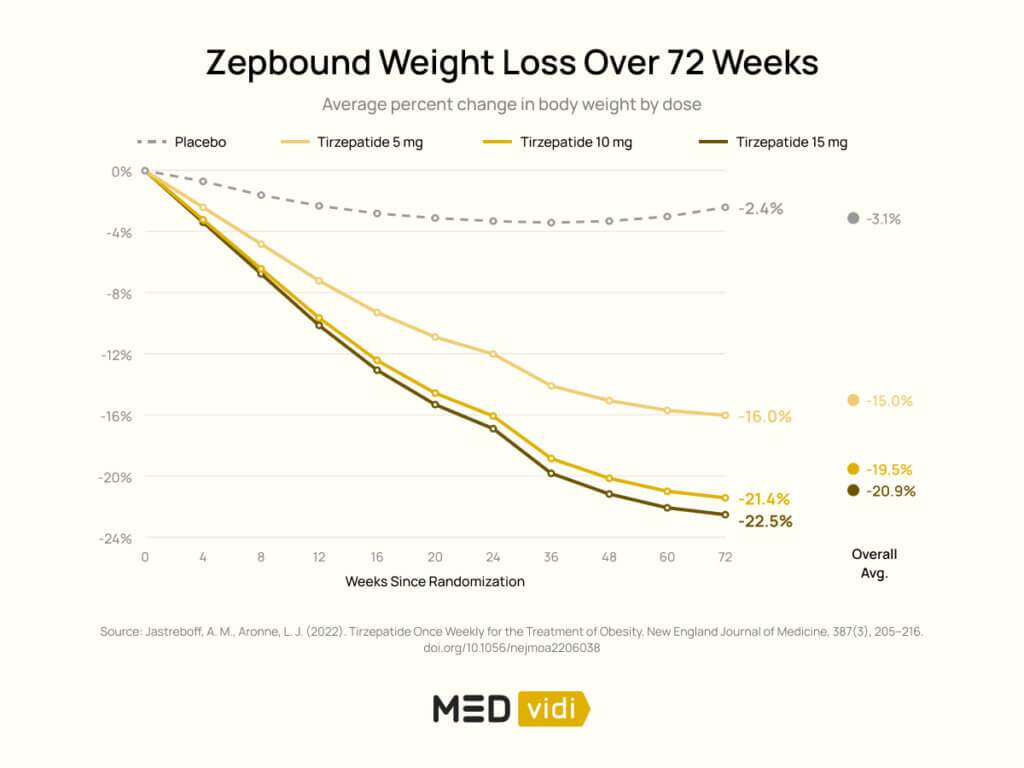
Source: Jastreboff, A. M., Aronne, L. J. (2022). Tirzepatide Once Weekly for the Treatment of Obesity. New England Journal of Medicine, 387(3), 205–216.
Understanding the Zepbound Weight-Loss Timeline
Weeks 1 to 4
For most patients, Zepbound doesn’t work right away for weight reduction. This starting dose is not considered a weight loss (therapeutic) or maintenance dose. It’s needed to allow your body to adjust to the medication.
Weeks 5 to 8
Across all doses, the average weight drop from baseline at week 8 is around 6%. Depending on your weight loss goal, a healthcare provider may recommend that you stay on the 5 mg maintenance dose.
Weeks 12 to 24
Accelerated weight loss continues until around 6 months. For people following the full titration schedule, this is when the maximum 15 mg maintenance dose is reached.
6 to 12 Months
The weight loss slows, but continues steadily.
Beyond 12 Months
After a year, weight loss slows considerably or stabilizes.
How Much Weight You Can Lose With Zepbound
Clinical trials found that after about a year on a maintenance dose, the average weight loss is roughly
- 5 mg → 15%
- 10 mg → 19.5%
- 15 mg → 20.9%
Importantly, for both the 10 mg and 15 mg doses, people were still losing weight at the end of the 72-week trial, though weight loss was faster in the first 24 weeks.
Why Does Zepbound Work Faster for Some People Than Others?
It’s a fact that Zepbound works more quickly for some individuals, and some lose much more weight than others. One factor affecting the varied blood sugar control and weight loss results observed
Weight loss results are also influenced by lifestyle: how much physical activity the person is doing, and whether they have healthy eating habits.
Other causes of slower weight loss include:
- Having untreated co-existing medical conditions that might trigger weight gain, such as diabetes or insulin resistance, underactive thyroid, or polycystic ovarian syndrome (PCOS), recently renamed, polyendocrine metabolic ovarian syndrome (PMOS).
- Using medication that can promote weight gain, for example, hormones, cortisone, antidepressants, high blood pressure, and epilepsy medication.
Interestingly, the clinical trial doesn’t mention that starting weight and body composition influence the speed or amount of weight loss in patients without type 2 diabetes.

What to Do If Zepbound Doesn’t Seem to Be Working
But what should you do if you’re using Zepbound and not losing weight? This checklist will help you work through the possibilities:
- The timeline: Remember that some people will only experience weight loss at the highest dose. So if you’re still in the 5-month titration phase, don’t lose hope yet.
- Lifestyle changes: Make sure you’re eating a low-calorie, balanced diet, and that your exercise routine is adequate. If necessary, consult a nutritionist or trainer.
- You might not have realistic expectations: The higher your weight-loss goal, the more difficult it might be to reach. For example, only about half of the people achieved ≥20% weight loss.
- Dosing instructions: Not sticking to the prescribed dose or missing doses can affect how Zepbound works.
- Weigh-in timing: Weight naturally fluctuates day to day, so instead, weigh yourself weekly or monthly to see real change.
- Sleep and stressors:
Lack of sleep[11] andhigh levels of stress[11] or anxiety can slow weight loss. - Consultation with a healthcare provider: Exclude health conditions and review medications that might trigger weight gain.
- You might be a Zepbound non-responder: 1 in 10 individuals never lose ≥5% of their baseline weight on Zepbound for different reasons.
Conclusion
Tirzepatide (Zepbound) is an injectable weight loss medication helping many people lose weight. However, significant weight loss may not be guaranteed because the results may vary from person to person. So, it’s not worth comparing yourself to a friend or celebrity.
Instead, book an appointment with the MEDvidi team for ongoing support. A licensed medical provider will assess your health status, create a personalized weight loss plan online, and guide you through the whole process, taking the guesswork out of it.
FAQs
Does Zepbound work immediately?
It is unlikely that Zepbound will work immediately for weight loss. A low dose is prescribed in the first 4 weeks of treatment, allowing the body to adjust and lowering the risk of side effects. But, for most people, 2.5 mg has not proved to be a therapeutic dose.
Will I lose weight on 2.5 mg of Zepbound?
It is unlikely that you will lose weight on 2.5 mg of Zepbound. It is purely a starting dose that allows the body to adjust to the medication. For most people, it takes anywhere from 2 to 6 months for Zepbound to work once they’ve reached therapeutic doses of 5 mg, 10 mg, or 15 mg.
What to expect in the first week on Zepbound?
In the first week on Zepbound, you can expect to experience mild to moderate side effects that usually settle over the next few weeks. However, do not expect to lose weight during this time.
How much weight can you lose on Zepbound in 1 month?
There is usually no measurable weight loss in the first month of starting Zepbound. During this time, a low dose of 2.5 mg is used solely to help your body adjust to the medication and reduce side effects.
How long does it take to lose 20 pounds on Zepbound?
There is no set timeframe for losing 20 pounds on Zepbound. Several factors influence this, including the individual’s metabolism and response to the medication, their baseline weight and body composition, the coexistence of weight-related health conditions, and whether they’ve made the necessary lifestyle changes.