



Highlights
- Many types of medical providers can prescribe anxiety medication. The choice can depend on many factors, including the severity of your symptoms and what type of providers are available in your area.
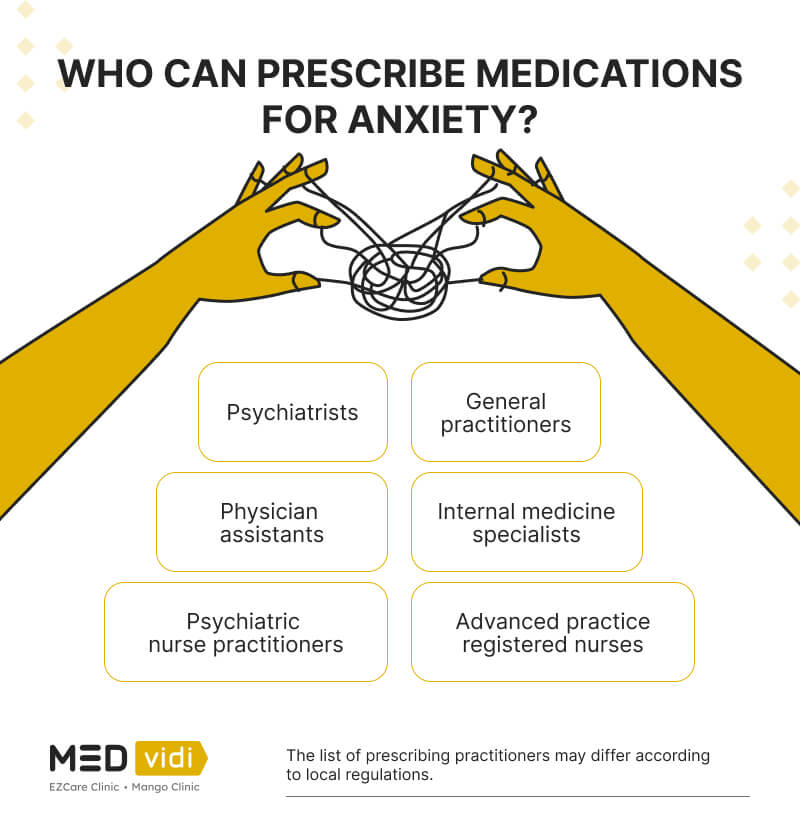
- Licensed physicians, including psychiatrists and primary care doctors, can prescribe anxiety medication. Advanced practice registered nurses (APRNs) and physician associates (PAs) can also prescribe anxiety medication, but may need physician supervision in some states.
- Therapists and counselors cannot prescribe anxiety medication. Most psychologists can’t prescribe it either.
- Some anxiety medications are controlled substances and come with additional risks. Some providers may not prescribe them, especially online.
Medication can be a helpful tool to manage anxiety. But you can’t just get medication for anxiety over-the-counter — you need a prescription. That means you’ll need an appointment with a licensed medical provider who can evaluate your symptoms and decide if medication could be right for you.
Many different types of providers can prescribe anxiety medication, including your primary care physician (PCP). But the choice of the right provider for you depends on many factors, including the severity of your symptoms and your history of taking anxiety medications. Access and insurance coverage can also play a role.
In this article, we’ll explain who can prescribe anxiety medication and what to expect when you ask about treatment.
Who Can Prescribe Anxiety Medication?
Many different types of medical providers are able to legally prescribe anxiety medication.
|
Provider |
Can they prescribe anxiety medication? |
Notes |
|
Psychiatrist |
Yes |
Complex or severe anxiety; evaluation, diagnosis, medication management, treatment of co-occurring mental health conditions, resolving prior medication issues |
|
Primary care physician |
Yes |
Initial screening, treatment of mild-to-moderate symptoms, first prescription, referrals; ongoing prescriptions when condition is stable |
|
Psychiatric mental health nurse practitioner (PMHNP) |
Yes |
Mental-health evaluation, treatment of complex or severe anxiety, medication management, managing co-occurring mental health conditions, follow-up care. Prescriptive authority and practice independence vary by state |
|
Advanced practice registered nurse APRN (not board certified in psychiatry) |
Yes |
Primary care evaluation and treatment of mild-to-moderate anxiety, medication management, referrals; prescriptive authority and practice independence vary by state |
|
Physician associate (PA) |
Yes, with physician supervision |
Primary care, urgent care, or psychiatry clinics; evaluation, initial treatment, medication management, referrals; prescribing authority and collaboration requirements vary by state. |
|
Therapist / counselor |
No |
Therapy, coping skills, CBT, support, referrals to psychiatry when clinically appropriate |
|
Psychologist |
Prescriptive privileges in some states |
Therapy, testing, diagnosis, referrals; limited prescribing exceptions in some states |
Anyone with a medical license (M.D. or D.O.) can legally prescribe anxiety medication. Advanced practice registered nurses and physician associates can also prescribe it, but they may need to be supervised by a licensed physician depending on the state. When you can, it’s always best to work with a medical professional who has specific expertise in treating anxiety disorders.
The type of provider you choose to work with can depend on many factors, including how severe your symptoms are and how quickly you need an appointment. You might also need to consider what types of providers are available in your area and what your insurance covers.
Psychiatrists
Psychiatrists are licensed physicians who have specialized training and expertise in mental health. They’re often the most suitable type of provider to see if you live with anxiety. They’re able to evaluate your symptoms, diagnose a condition, and walk you through different treatment options.
It may be especially helpful to see a psychiatrist if you have severe anxiety symptoms (like panic attacks) or live with co-occurring mental health conditions like depression or attention-deficit hyperactivity disorder (ADHD). Psychiatrists also have deep knowledge about how different medications can interact with each other. So if you’re already taking medications for mental health treatment (or you have in the past), then it may be best to see a psychiatrist.
A real barrier is that many states are facing a psychiatrist shortage. Unfortunately, this means that there may not always be a psychiatrist available to see you in your area within a reasonable timeframe.
Primary Care Physicians
Your primary care physician (PCP, general practitioner, internist, or family medicine physician) can also prescribe anxiety medications. For many people, they’re the first stop for treatment. You might mention your anxiety symptoms at your annual physical. Many family doctors also regularly screen for anxiety symptoms, so they may be the first ones to notice that you might be experiencing anxiety.
Although your primary care physician can legally prescribe anxiety medications, they’ll often refer you to a psychiatrist for long-term care. This is similar to referring you to a dermatologist for a skin condition or a cardiologist for heart disease. They want you to get the most specialized care for your symptoms.
But some people continue receiving anxiety medication from a family doctor for years. This may work well when the medication is effective and your condition is stable.
Advanced Practice Registered Nurses and Psychiatric Mental Health Nurse Practitioners
People with a nurse practitioner (NP) license are legally allowed to prescribe anxiety medication. In some states, they need to be supervised by a licensed physician.
Psychiatric mental health nurse practitioners (PMHNPs) have advanced training and expertise in mental health. They can complete psychiatric evaluations to provide a diagnosis. They know more about different medications that are used for anxiety and the side effects they come with. They’re also board certified to provide behavioral therapy.
PMHNPs can be a good option when you need specialized treatment but can’t find an available psychiatrist.
Physician Assistants
Physician assistants, or PAs, can prescribe anxiety medications, but only when collaborating with a licensed physician. Unlike advanced practice registered nurses, physician associates cannot practice independently in any state. The exact requirements for physician supervision or collaboration vary by state.
You may work with a PA in primary care or urgent care. Some PAs also work in psychiatry clinics. A PA may manage a straightforward case of anxiety. They can refer you to a psychiatrist or psychiatric mental health nurse practitioner if your symptoms are severe or your diagnosis is uncertain.
Other Doctors Who May Prescribe Anxiety Medication
Any licensed physician can prescribe anxiety medication. If you’re already working with a medical provider, then they may handle your anxiety treatment, especially if your anxiety symptoms are connected to other physical conditions.
- Neurologist — Your neurologist may prescribe medication for anxiety tied to neurological conditions, including migraines, epilepsy, or chronic nerve pain. Many anxiety medications can directly alleviate some neurological symptoms, especially pain.
- OB-GYN (gynecologist) — OB-GYNs focus on women’s health, including but not limited to pregnancy and childbirth. They may prescribe anxiety medications for patients who have postpartum anxiety or anxiety related to menopause.
- Cardiologist — Many anxiety symptoms can look like the symptoms of heart disease. Anxiety can also make heart problems (like high blood pressure) worse. So your cardiologist may prescribe anxiety medication to help you manage these overlapping aspects.
- Gastrointestinal (GI) doctor (gastroenterologist) — Anxiety can also often overlap with GI issues like Irritable bowel syndrome (IBS) or acid reflux. So your GI doctor may prescribe anxiety medication, especially if they think stress and anxiety are making your GI issues worse.
- Urgent care / ER clinician — Emergency clinicians don’t handle long-term treatment. But in some cases, they may prescribe anxiety medications to help you get through an acute crisis. For example, if you go into the ER experiencing a panic attack, then they may prescribe short-term medication and refer you to a specialist for ongoing care.
Who Cannot Prescribe Anxiety Medication?
Many mental health professionals treat anxiety without prescribing medication. They can provide therapy and help you understand what triggers your symptoms.
Providers who generally cannot prescribe anxiety medication include:
- Psychologists, with limited exceptions (
prescribing authority in nine states[1] ) - Master’s-level therapists, including licensed marriage and family therapists (LMFTs) and licensed professional counselors (LPCs)
- Clinical social workers, including licensed clinical social workers (LCSWs)
- Substance use counselors
- Other mental health providers who do not hold a separate prescribing credential
Therapists use approaches like cognitive-behavioral therapy to address anxiety. They may help you work on avoidance or changing anxious thought patterns. When medication is clinically appropriate, they can refer you to another provider (like a psychiatrist or psychiatric mental health nurse practitioner) and work together with them to provide you with the most appropriate care.
A psychologist is different from a psychiatrist. Psychologists hold doctoral degrees in psychology, not a medical license. They can complete assessments and diagnose mental health conditions but they cannot generally prescribe medication. Some states allow psychologists to prescribe medication if they’ve completed rigorous post-doctoral training in psychopharmacology. But this is the exception, not the rule.
A therapist or psychologist may have prescribing authority if they also hold a separate medical or advanced nursing license. For example, someone might be both a licensed clinical social worker and an advanced practice registered nurse. However, their authority would come from that additional credential, not from their therapy license.
Can You Get Anxiety Medication Prescribed Online?
Licensed telehealth providers can prescribe anxiety medication online, as long as they hold one of the medical licenses we covered above. The provider needs to be licensed in the state where you’re physically located during the appointment. Some telehealth providers hold licenses in several states.
Online providers often prescribe non-controlled anxiety medications, including selective serotonin reuptake inhibitors (SSRIs) or serotonin-norepinephrine reuptake inhibitors (SNRIs). They may also prescribe other anxiolytic medications, if deemed suitable.
Some anxiety medications are controlled substances (these include benzodiazepines). These medications are subject to additional federal requirements and state laws. Some telehealth platforms do not prescribe them at all. At MEDvidi, licensed medical providers are authorised to prescribe anxiety medication online, when deemed clinically appropriate, after a comprehensive mental health evaluation.
An online appointment does not guarantee that you’ll receive medication. It also does not guarantee a prescription for a specific medication, especially a controlled substance. The decision whether to prescribe medication is at discretion of a healthcare provider.
Previously, you couldn’t get a prescription for controlled substances without first having an in-person evaluation. Since the COVID-19 pandemic, temporary federal rules have allowed qualified registered practitioners to prescribe controlled medications through telehealth, following specific guidelines. These temporary rules are scheduled to remain in place through December 31, 2026.
Your telehealth provider will:
- Complete a mental health evaluation.
- Make a diagnosis.
- Recommend a treatment plan, which may include medication when appropriate.
- Send your prescription to a pharmacy of your choice.
- Schedule follow-up visits to monitor your response to treatment.
An online evaluation will include questions about your symptoms and treatment history. Your provider will also review your current medications to make sure there are no risks.

What Medications Might a Provider Prescribe for Anxiety?
“Anxiety medication” is an umbrella term. Several types of medication can be helpful for anxiety, and they work in different ways.
The right medication depends on your exact symptoms and diagnosis, and it may take time to choose the most effective and safe one for you. Your provider will also review your health history, including medications you already take. If you get side effects, they might switch you to another type of medication.
Medications commonly referred to as antidepressants are often used to treat anxiety, even if you don’t have depression. For example, they are a common choice for generalized anxiety disorder. They can often be preferable to other options, because some faster-acting anxiety medications can lead to addiction.
Common anxiety medications include:
- Selective serotonin reuptake inhibitors (SSRIs), like sertraline (Zoloft) and escitalopram (Lexapro).
- Serotonin-norepinephrine reuptake inhibitors (SNRIs), like venlafaxine (Effexor) and duloxetine (Cymbalta).
- Buspirone (Buspar).
- Benzodiazepines like clonazepam (Klonopin), lorazepam (Ativan), diazepam (Valium), and alprazolam (Xanax); these work quickly, but carry bigger risks. They may be prescribed in certain cases, such as panic disorder.
- Beta-blockers like propranolol may be prescribed off-label for physical symptoms of situational anxiety (like fear of flying).
- Hydroxyzine, an antihistamine, may be used for short-term anxiety relief.
Never stop taking anxiety medication abruptly. This can lead to dangerous or life-threatening
What to Expect at Your Appointment
During your initial appointment, your provider will ask detailed questions about when your anxiety symptoms started and how often they happen. They’ll also want to know what tends to trigger the symptoms and how anxiety affects your daily life, from your sleep and concentration to your work or relationships. Tell them if you experience panic attacks or if your anxiety only comes up in certain situations (like public speaking).
Your provider will review any medications and supplements you take, as well as your substance use risk. If you’ve tried anxiety treatment before (including therapy), explain what helped and what didn’t. Also tell them about any side effects you experienced.
Sometimes, your provider may recommend lab testing or refer you to another specialist if they think a physical condition could be causing your symptoms.
Based on their evaluation, your provider will decide whether medication could be right for you. They may recommend therapy first for milder symptoms or suggest combining therapy with medication. They might also recommend lifestyle changes, like exercise, that help reduce anxiety. A prescription isn’t automatic, and not everyone needs pharmacological treatment for anxiety.
Follow-up appointments are an essential part of anxiety treatment. Your provider will ask if the medication is helping and discuss any side effects you’ve noticed. Based on your response, they may adjust your dose or recommend a different medication altogether. It often takes some trial and error to land on the right medication and dose.
Discussing Your Anxiety Treatment With a Doctor
It’s normal to feel nervous about how to broach the subject of medication with your provider. However, remember that asking a doctor for anxiety medication should not be your goal. Instead, it’s better to focus on describing your symptoms and experiences to help them find the most appropriate treatment. Tell your provider how exactly anxiety is affecting your life and that you’d like to discuss treatment options.
Here are a few helpful steps:
- Explain when your symptoms started, as precisely as possible.
- Describe what your anxiety feels like.
- Share how often your symptoms happen and how long they last.
- Explain how anxiety affects your daily life, whether it be at work/school or in your relationships.
- Describe what you’ve already tried to manage it.
- List the current medications and supplements you take.
- Tell your provider about any other physical and mental health conditions you live with, if they’re not already aware.
- Share any past experiences with mental health medication or other types of treatment (like therapy or hospitalizations).
Questions You May Want to Ask
- What type of anxiety might be causing my symptoms?
- Would you recommend medication, therapy, or both?
- What are the usual first-line medication options? What are the benefits and risks of each?
- How long might it take before I notice an improvement?
- Which side effects should I watch for?
- When should I schedule a follow-up appointment?
- How will you measure my progress?
When to Seek Immediate Help
Call 911 or go to the nearest emergency room if anxiety comes with chest pain, fainting, shortness of breath, or sudden confusion. These could be signs of other health conditions. If you feel like you might harm yourself or someone else, call or text 988. There are trained, compassionate listeners available 24/7 to talk with you.
The Bottom Line
Many different medical providers can prescribe anxiety medication. The choice depends on the severity of your anxiety and the type of care you’re looking for. A PCP is often a practical first step, but a psychiatrist or PMHNP may be better if you have complex symptoms or live with other mental health conditions.
No matter what type of provider you choose, the first step is to get an evaluation. The licensed medical providers at MEDvidi are here to help and provide anxiety treatment online.
FAQs
Can a primary care doctor prescribe anxiety medication?
Why won’t my doctor prescribe me anxiety medications?
Can a nurse practitioner or physician associate prescribe anxiety medication?
Can a therapist prescribe anxiety medication?
Master’s-level therapists can provide anxiety treatment like therapy, but they cannot prescribe medication unless they also hold a separate prescribing credential. If your therapist is a psychiatrist or PMHNP, then they can prescribe medication.
Can a neurologist prescribe anxiety medication?
Can you get anxiety medication without seeing a doctor in person?
A licensed telehealth provider can evaluate you and prescribe anxiety medication online when appropriate. Controlled medications have additional restrictions and may not be available through every online provider.